Tag Archives: career counseling

What’s the Key to Success in Life?


success-really-looks-likeBelow is a link to over 80 people’s responses that address a burning question:  “What would you say if a teenager walked up and asked you: What’s the key to success in Life?” The question drew over 80 responses very quickly from professionals in a wide range of professions. Try using the compiled list of responses as a discussion topic with teenagers. If you are a teenager, try this exercise:

  • Highlight the top four responses (your favorites). Why were they your top four?
  • Were there similarities based on gender or cultural background, etc.?
  • Of your top four, what industry or job did the respondent list?
  • Which responses did you not like? Why?

Download the “response paper” here

Supporting teenagers to find their own voice in the world is what Career Coaching for Studentstm is all about. Let me know if you’d like more information.

My best,
Carl Nielson
Founder and Chief Discovery Officer
carl@successdiscoveries.com
Career Coaching for StudentsTM
a Success Discoveries program
(972) 346-2892

What is the ROI Value for Career Coaching in High Schools?


Supply vs Demand for Student Career Coaching?A posting on LinkedIn’s Life Coaching Teens and Young Adults asked for advice on pricing coaching services to schools. That started my brain thinking about the pricing formula I typically use for in-school, school-partnership, public workshop and private one-on-one programs using the Career Coaching for Students program.

Pricing – and value/ROI – for high school career counseling and coaching is very interesting and important. I certainly don’t have a definitive answer for other coaches but I’d like to share a few discussion thoughts, one formula for pricing and compare that to the per-student cost to deliver a one-semester course.

Note: All examples in this article use “typical” data but a specific proposal always gives consideration to the client’s needs and how the program being delivered is customized to meet that need.

Pricing vs Value/ROI vs Demand

In my corporate work, I have a minimum day rate of $3,500 as a starting point. That fee is neither high nor low, more likely it is about in the average for a consultant/coach to deliver a day’s worth of work in a corporate setting and includes costs such as assessments, books and other supporting materials. If the number of people participating is larger than 15 the fee goes up based on value and expenses on a per-person basis.

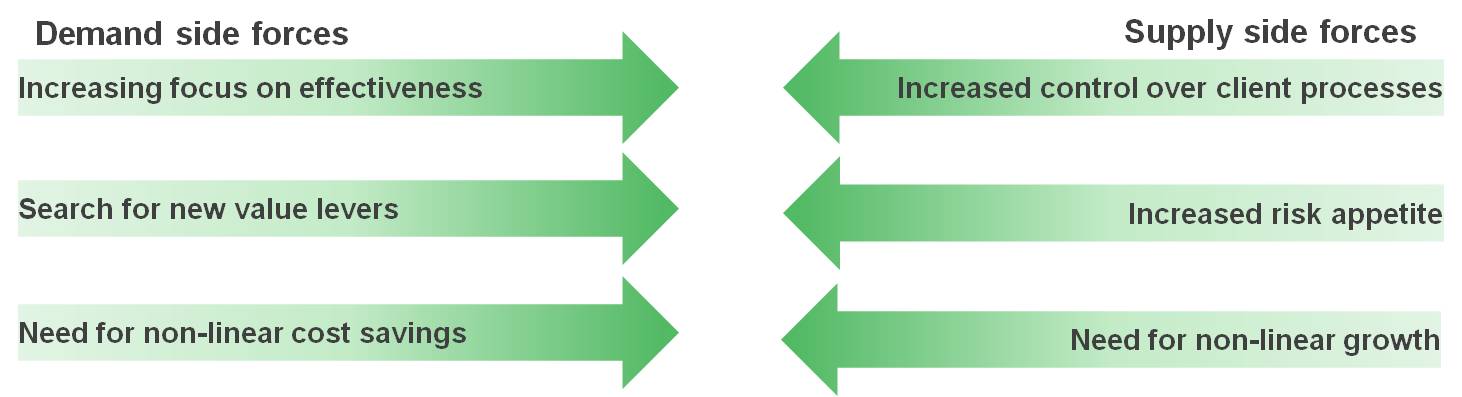
Deal-Demand-and-Supply-ForcesFor example, I am about to kick off a high-potential coaching program for 15 employees of a large multinational corporate business unit that includes an opening 2-day program, four months of one-on-on coaching and a closing 2-day program for a fee of $55k+. What does this have to do with schools/colleges? I think I have a lot to offer to schools. I would love to be full-time in that venue. Unfortunately, corporate clients tend to value my services greater. The irony is that if an education institution went all-in with say a thousand students in my Career Coaching for Students program over a 4 year contract, the math would work out ok for me (not great but doable). Most school administrators and college career centers think on a much smaller scale – especially when it comes to outsourcing a service they want to deliver with in-house teaching staff. From my information, the in-house staff model is failing – resulting in a great deal of wasted $$ and low-to-no benefits for the school or the student.

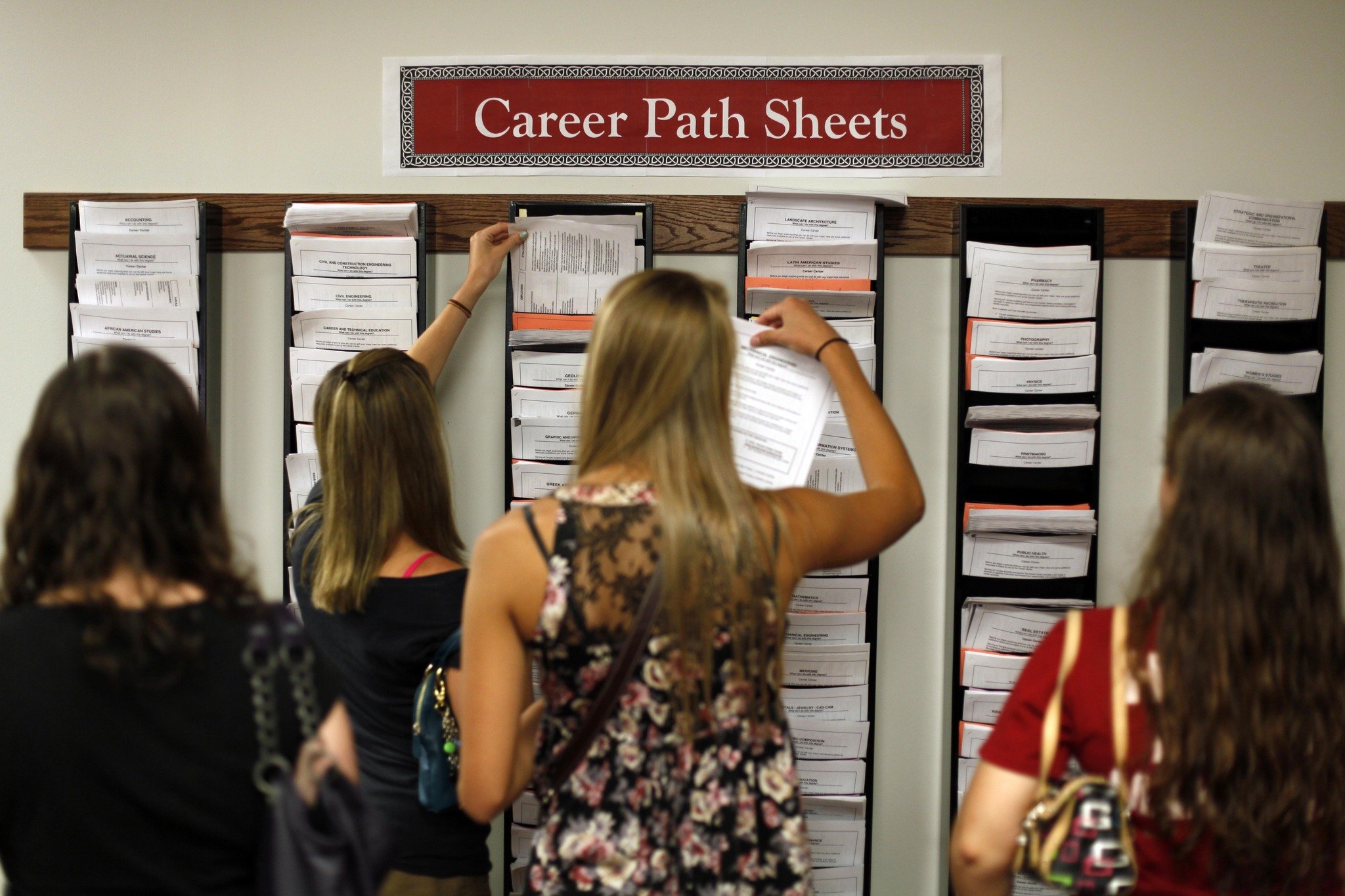
College-Students-Following-The-Career-Path-SheetsAt the college level, student participation in a college’s career exploration coaching service within the career center is less than one percent of the college’s student population according to several articles and social media postings by Career Center Directors. One thing we know is that students will recommend or not recommend to their friends based on a program’s value – regardless of if it is free or fee-based. If a program isn’t growing and the value isn’t driving demand, it is likely not being recommended by students to students. Having less than one percent participating in a service tells me students are “not” recommending the offered program to their friends. With a low participation rate, college presidents decide to fund other programs. But the need for credible career coaching remains a “big” need as evidenced by the “average” number of changes in majors per student in college and the average number of semesters to graduate with an undergraduate degree.

For those of us in the coaching profession, there is great economic diversity. Some professional coaches are the primary bread winner in the family. Others provide coaching services as a secondary and discretionary family income. If you fall in that latter category of “discretionary income” coaching, you might look at volunteering. If you don’t need income to live on and are in a position to do volunteer work, volunteering is a great and noble thing to do. Many high schools and colleges may consider you but you may also find trying to volunteer to be as frustrating as pricing for your services. I see too often those in the coaching profession who have the spouse’s income providing for the primary financial needs of the family. The need to price professionally isn’t as great and consequently, there is a low-ball pricing mentality. My opinion is that our passion for coaching (serving the needs of others) shouldn’t dictate our pricing strategy. I suggest you try to identify what the benefits will be for the client and price based on value – not based on a minimum income requirement.

A Pricing Formula for In-School Offering

The following is a general formula that I use for nonprofit/education institutional pricing proposals. My belief is that I either choose to volunteer or I choose to propose a professional solution that adds real value and price the proposal accordingly.

Sample educational institution pricing formula for Coaches:

  1. Calculate a desired hourly rate. What annual amount of income from coaching are you wanting? In other words, how do you value yourself in this profession on an annualized basis? Example: Let’s say you have a goal of $50,000 per year from coaching. And you think, “if I reach my ‘goal’ of 30 hours per week (pretty much full time), I will be pleased”. That equates to $50,000/2080 hours = $24.00 per hour (nothing for vacation, insurance, home office expenses).
  2. Double the hourly rate. This covers your personal expenses, taxes – any general costs of doing business and time for marketing to this client = FINAL HOURLY RATE.
  3. Determine all program delivery expenses (student materials, reproduction costs, etc.). Calculate down to the per student cost.
  4. Calculate the Total Program Delivery Rate. How many hours for delivery + how many hours for prep = Total Hours. Take Final Hourly Rate x Total Hours = Total Program Delivery Rate
  5. Calculate Total Raw Cost. Multiply # of student participants x per student cost =  Total Raw Cost
  6. Calculate Total Cost. Multiply Total Raw Cost x 1.25 = Total Cost
  7. Calculate Proposal Amount. For Small one-class proposal: Add Total Program Delivery Rate + Total Cost for a Proposal Amount.
    For a Large, multi-class calculation: [Total Program Delivery Rate x # of classes of 25 students] + Total Cost = Proposal Amount

Program Benefits and Goals:

For fun, let’s test this with a program called Career Coaching for Students delivered in a high school class room setting for one semester (http://www.careercoachingforstudents.net):

Better Career Planning Better LifeThe expected benefits need to be articulated and assigned measures that we can refer to later. Here is a short list of expectations for the Career Coaching for Students program:

  • Higher overall student academic engagement
  • Lower drop out rate
  • Greater percent of students with a plan for post-secondary education
  • Higher average class GPA at graduation
  • Higher SAT/ACT test scores.
  • Less higher education costs for students and parents (due to less changing majors and graduating on time from post-secondary education).

Applying the Pricing Formula – A Simple Example for the Coach

  1. Annualized net personal income goal: $50,000 = $24 per hour
  2. 2 x $24/hour = $48 hourly rate
  3. Program Delivery Expenses per student (binders, assessments, online student resource center):
    $129 for 50 students
    $99 for 350 students (we can lower costs dramatically when we have higher quantities, plus customize the binder with the school’s name and mascot)
  4. Program design.
    One class time per week for a semester for a class of 25 students.
    15 weeks per semester = 15 delivery hours for 25 students = .6 hours per student PLUS prep hours of 10 hours (rounds up to 1.0 hour per student)
  5. Total Program Delivery Rate
    $48 x # of hours (25 students = 25 hours in this example) = $48 x 25 = $1,200 Total Program Delivery Rate
  6. For a smaller program of 50 students: 25 students x $129 = $3,225
    For a larger program of 350 students: 350 x $99 = $34,650
    =Total Raw Cost
  7. Total Cost
    For smaller program: $3,225 x 1.25 = $4,031 one class of 25 students
    For larger program: $34,650 x 1.25 = $43,312 for 14 classes of 25 students
  8. Proposal Amount
    For one semester, one class of 25 students: $1,200 + $4,031 = $6,231
    For one semester, larger program of 350 students, 14 classes:
    $34,650 + 43,312 = $77,962

Analyze for Cost/Value Proposition:

Career Coaching for Students offered in-school:
Small one-class program cost per student: $249
Large program, multi-class cost per student: $223

To compare, as a publicly offered program to families, we average around $500 per student in a group workshop setting of 10 – 15 students for a 12 – 15 hour program. One-on-one for the CCfS program (about 12 – 15 hours) is $750+ per student (higher on the East and West coasts).

vs the Cost for One Teacher-Delivered Course in High School

What is the cost per student for any high school course? To be more exacting you could do the following calculation:

Teacher hourly salary rate x [# of hours for class + # of prep/support hours]

or  use a simpler calculation:

Teacher annual salary ($57,000) divided by # of classes taught over two semesters (14) divided by average # of students in the class (25)
References
http://money.usnews.com/careers/best-jobs/high-school-teacher/salary
http://new.every1graduates.org/wp-content/uploads/2012/03/OVAE_Cost_of_SLCs_Final_Balfanz.pdf

Teacher-Delivered Cost per Student

Teacher = ($57,000 / 14)/25 = $162 per student per class.
Of course adding school payroll burden for benefits and retirement of approximately 30% = $162 x 1.30 = $211 per student as a minimum. Double that to cover physical buildings and staff overhead which brings the teacher-delivered cost per student per course up to a more realistic $422 per student per course.

Your Pricing

Based on teacher-delivered pricing, you have room to price your offering in a way that is a win-win for you and the school. Keep in mind you are being given the facilities within the school and you are benefiting from the administrative overhead and lower overall marketing costs so it is not realistic to set a price of $422 per student for your offering. The price you want to stay closer to is the $211 per student for  a work agreement of 15+ students on one or two scheduled days per week.

Doing single student counseling/coaching with a school district? You need a contract based on multiple students in a semester that you will be providing one-on-one services to. That might be an estimate but at least you see what kind of interest, if not commitment, the school district has in using you.

Carl Nielson is Chief Discovery Officer of Success Discoveries and Managing Principal of The Nielson Group, an organizational development consulting firm serving Fortune 100 company clients. As creator and master trainer of the Career Coaching for Students program for high school students and Career and Success Skills Mastery for College Students and Recent Grads, Carl and his team of licensed facilitators across North America have helped thousands of students find a better way through a career exploration process that works.  Self-directed assessment and career exploration coaching packages start at $399. Local public workshops, distance-coaching and in-school programs available. Call for more information at 972.346.2892.

Do I Need to Have A Career Plan in High School?


dream-job-nextexitThe old saying “what you don’t know won’t hurt you” means if you do not know about a problem, you will not be able to make yourself unhappy by worrying about it. That belief is supported by the belief “ignorance is bliss“.

When it comes to creating/having a career plan, focusing on it (worrying about it) will actually create a great deal of happiness, help you avoid major stress and save you (and/or your parents) thousands of dollars. Based on almost daily news, the amount of college loan debt has escalated to levels considered very dangerous for our economy and for individuals. Having excessive education loan debt is a personal accountability issue – not a national economy issue.

How much debt do you want or plan to have when you graduate college? According to an article in the Huffington Post, “the average college graduate obtained a degree in 2012 with $29,400 in student debt, up from $18,750 less than a decade before in 2004, according to a new report.” To avoid unnecessary costs (which frequently ends up becoming debt) during college, avoid changing majors and choose the right college or university for you. If you are unsure about a career direction and go into college as an “undeclared major” you are likely to not have any revelations about a career direction by the end of your Freshman year. Whether you put it off or tackle career planning in high school, the only way to avoid unnecessary expense and find true happiness is to do the career planning work.

So, the short answer to the question, Do I Need to Have a Career Plan in High School?, is that you need to be doing the work of creating a career plan. The Career Coaching for Students program looks at this work as developing Decision Making skills. Decision making is a recognized skill of highly successful people and happens to be one of the weakest skills for incoming Freshman in college. You don’t necessarily need to have made a career decision but you need to be well on your way to identifying and understanding your career interests and the strengths, weaknesses, opportunities and threats associated with your career interests.

A career plan is the reward for the work you’ll do to determine your skills and interests, what career best suits your talents, and what skills and training you need for your chosen career.

By developing a career plan, you can focus on what you want to do and how to get there without worrying and without unnecessary expense. To do this well, you must start with a “professional-grade assessment” that helps you understand your personality strengths. Career planning is only one benefit of using assessments to become much more self-aware.  You’ll also find you will have a better understanding of your skills and experiences to discuss with potential employers (on your resume and in future interviews).

To eventually have a defined career goal, get started now.

A career goal can be a specific job you want to do — such as doctor or teacher — or be a particular field you want to work in, such as medicine or education.

Rather than limiting your future, a career goal may help you discover career possibilities you wouldn’t have thought of otherwise. There are several job possibilities with any chosen career. For instance, if you choose a medical career, you may want to be a scientist, a nurse, or a doctor.

A career goal can also guide you into doing what you want with your life.

  1. Become Self-Aware.
  2. Identify Career Interests.
  3. Narrow your career interests to a top two or three.
  4. Determine what you need to do to prepare for your chosen career.
  5. Besides the right college major, do you need special training? Some careers need the specialized training but don’t require a college degree. If so, find out what schools offer the training you need. Also, determine what kind of experience will you need to be successful in the career. Consider an internship as a way to get work experience in the career field.
  6. Write your career plan.  Use online tools to help you create a visual career plan.

Carl Nielson is Chief Discovery Officer of Success Discoveries and Managing Principal of The Nielson Group, an organizational development consulting firm serving Fortune 100 company clients. As creator of the Career Coaching for Students program for high school students and Career and Success Skills Mastery for College Students and Recent Grads, Carl and his team of licensed facilitators across North America have helped thousands of students find a better way through a career exploration process that works.  Self-directed assessment and career exploration coaching packages start at $399. Local public workshops, distance-coaching and in-school programs available. Call for more information at 972.346.2892.

5 Things Lucky People Do


Luck starts with a plan and action“The Luck of the Irish” is an American phrase that comes from the days of the gold rush in the 1800s.  Intolerant Americans figured the Irish people weren’t smart enough to find gold, and blamed their success on being lucky rather than skilled. In reality, America’s early immigrants have time and again proven themselves to be hardworking and smart enough to generate their own good fortune consistently.

We often excuse our own inadequacies by crediting the success of others to luck.  If everyone went at their personal goals with the level of commitment and follow-through as the “lucky ones” the probability of success becomes fairly equal. In baseball terms, the big hitters are simply swinging the bat more often.

good_luck_four_leaf_cloverThe truth is that seemingly lucky people are opportunists. They do things to be prepared so that they are ready to take advantage of the world around them. For them, it’s not about being in the way of good luck or bad. It’s the actions they take to get what Jim Collins refers to as a high return on luck whichever way the pendulum swings. Follow these five tips and you can be as lucky as anyone, no four-leaf clover required.

1. Play to your strengths. So much time and energy is wasted trying to do things you probably don’t do very well. Author and Inc. columnist Lewis Schiff learned from his survey of incredibly wealthy people that they got that way by focusing only on what they do best. Choosing a career that aligns with your personal motivation and talents gives you an advantage over 50% of those currently in the workforce. By knowing your strengths and weaknesses, you will shine where you excel and attract opportunity. You’ll find ways to compensate for your weaknesses, such as delegating or partnering with someone that has your weakness as a strength. Good things come to those who emanate success.

2. Prepare in advance. Unlucky people often get that way because they’re reactive and unprepared for whatever comes. The college student who chooses to organize and follow a self-study program so they can take and pass a difficult certification exam outside of their course work – just so they are better qualified to secure a key summer internship – are expecting to be successful. They wouldn’t consider themselves lucky when the internship offer comes. Some people consider planning to be useless because everything changes and you can’t predict the future. The point of a plan isn’t to follow it no matter what, it’s to establish a structure for smart decision making that allows you to succeed no matter what the future might bring.

3. Start early. Some people seem to have more hours in the day. They get that way by planning projects in advance – this gives you the extra time you need – and then using a disciplined approach to allocating time on a consistent basis. Make promises to yourself using integrity to hold yourself personally accountable. So many people only want to put their energy into things that provide immediate gratification. The most fortunate people I know are the ones who planted seeds early and took the blind leap of faith that the investment in time would be personally rewarded exponentially.

4. Connect with as many people as possible. The key to success is access to opportunity. Access comes from influence. If you aren’t meeting people of influence regularly, your ability to access opportunities is limited. In a way, your network of influencers becomes your following. The bigger your following, the more opportunity you are being exposed to. The only way to build a big following is to provide value to many people. You have to provide the sort of value that will cause people to think of you at the right time. Influencers take great joy in knowing a wide range of people and recommending or connecting others. Being open and making yourself available to be known is a kind of value. Are you creating that kind of value? If not, figure how you can. Being an influencer isn’t important, being of value to influencers is critical. If you want more luck, you’ve got to break out of your cocoon.

5. Follow up and be of value. Opportunities often come and go because people don’t respond in a timely manner. I’m constantly amazed when people ask me for something and I respond immediately only to never hear from them again. I make it my business to know and recommend only the best ideas – whether to family, friends, colleagues or clients. That takes work – which I am always glad to do. I believe that following up is often more powerful and impressive than the act of initiating. I have learned to become wary of those that use me for my ideas and never seem to see the need to be of value to me. To be of value to me is simple. It could be as simple as letting me know you followed my advice and the outcome (the value of letting me know I was helpful). On a bigger scale, in a business context, it could be that you recommended me to someone that would benefit from my services (The Nielson Group or Success Discoveries) or, if you were in a position of authority in an organization, and recognized how I could help, that you made it a priority to introduce me to those stakeholders that need to know I exist. Whatever you do, don’t allow yourself to be seen by others as a user. User equals looser in the end. Following up is simple.

May you be so lucky to have people in your life that follow up. So start creating your own luck. Now.

Is Choice of College Setting Your Destiny?


Your destiny based on college choiceThe article in the Washington Post, The Resume That Makes for a Top Executive, by Gena McGregor, references a new study published this week in the Harvard Business Review, which provides a snapshot over time of the demographics and career trajectories of Fortune 100 executives. The study shows how much the boardroom is changing. Not all students are interested in becoming the next CEO of Google, but choosing a college continues to be riddled with anxiety for those that have choices. The study’s data reveals some changes that are worthy of noting for any high school student (or parent) struggling over which college/university will be best – regardless of career direction.

The study states the majority of top executives now have undergraduate degrees from state universities, with only a fraction going to college at one of the Ivies. Nearly 11 percent of the top executives are foreign-educated, up from just 2 percent in 1980. And however few women there may be in leadership positions, they actually climbed the corporate ladder faster than men, spending fewer years, on average, in each job and taking a shorter time to get to the top.

The research, an effort by professors from the University of Pennsylvania’s Wharton School and IE Business School in Madrid, compiled the backgrounds of the top 10 executives at each Fortune 100 company in 2011 — those who might be called the most powerful 1,000 people in corporate jobs. They conducted the same study in 1980 and 2001.

What has interested people most about their study has been the details about where executives got their education. “I was surprised that’s been such a remarkably big deal for most folks,” Cappelli says. “I guess it’s something that makes people think about their children. Anyone with kids is thinking about these roles, and it’s an aspect of inequality that’s very noticeable to people.”

The study shows the education backgrounds of top corporate leaders are becoming much more equal over time. In 1980, just 32 percent of leaders went to a public university. By 2001 that had grown to 48 percent, and in 2011 the number reached a majority, with 55 percent of corporate leaders going to state colleges. While the percent of Ivy Leaguers has dropped slightly, from 14 percent in 1980 to 10 percent in both 2001 and 2011, those with degrees from private non-Ivies has plummeted, falling from 54 percent in 1980 to just 35 percent in 2011.

Why are we seeing so many more corporate executives from public universities? More meritocratic corporate cultures could be playing a role, Cappelli notes, but he thinks it’s mainly due to history. “It’s a bit of an archaeological story,” he says. “If you think back to when the executives now went to school, around 30 years ago, it was sort of the…golden era of state universities, which really boomed in the late ’60s and ’70s. Schools like Michigan and Berkeley — they were building these fabulous campuses, and pulling people in who would have otherwise gone to Ivy League schools.”

That’s not to say elite schools don’t still hold sway among MBA-holders and the very top leaders. If you look at the three most senior executives in each organization (say, the CEO, CFO and Chairman), 21 percent have an undergraduate degree from an Ivy League school, compared with 10 percent overall. Additionally, 40 percent of all the executives who hold MBAs got them at one of the top 20 ranked business schools in the country, many of which are at Ivy League universities.

Another way the makeup of the boardroom is changing, of course, is in the number of women. Like other studies before it, the Wharton/IE Business School professors counted the number of women at the top, finding that almost 18 percent of the top jobs were held by women in 2011. That’s a massive swing from 1980, when they reported finding no women among the top 1,000 corporate leaders.

More interesting than the stubbornly few number of women at the top, however, was the finding that women are managing to reach the top faster. It took women an average of 28 years to reach the “top-tier positions” (CEOs, vice chairs, presidents and the like), compared with 29 years for men. Women reached “middle-tier” jobs (executive VPs, general counsels, chief marketing officers) in 23 years, compared with 26 years for men. In addition, women were promoted quicker in each of their jobs, at an average rate of every four years, while it took men five.

Cappelli offers three explanations for why this might be. One, he says, could be an explicit effort by companies to get women into top jobs faster. “It’s possible that a type of affirmative action is going on,” he says. Another could be that the talent pool of women in these executive jobs is simply better. Because we see more women than men change work paths or drop out of the workforce in the middle rungs of their career, he says, it’s possible “the women are actually better because they’re self-selecting.”

Finally, Cappelli suggests, the difference may be due to the fact that there are more women in functional jobs — such as human resources, legal or marketing — for which the technical expertise needed means they’re promoted more quickly. In the report, the researchers call it “riding a different elevator.”

“If you’re going up through a functional track,” Cappelli says, “you could be advancing at a very different pace than the folks who are going up through operations jobs” that may require more rotations or longer tenures at each stop along the way.

Quirks about the leadership ranks at different companies, and what they might reveal about the different corporate cultures, may be even more interesting than the broad-based trends the study found. For instance, the average length of a top Google executive’s career is just 14 years (the shortest in the Fortune 100) while at Hewlett Packard and ConocoPhillips, it’s 32 years (the longest). Meanwhile, some companies have outstanding male-to-female ratios among the top 10 execs — at Target, Lockheed Martin and PepsiCo, women hold half the senior management jobs — while as of 2011, there were still 17 companies in the Fortune 100 with no women at all among their top 10 leaders.

To Cappelli, this is among the most interesting of the study’s results. “They’re all just so different,” he says. “There’s a UPS model, there’s a Google model and there’s an Exxon model. The idea that there is a corporate model of leadership just doesn’t seem to resonate any more.”

The take-away – Strategically narrow your college choice

Many high school students choose a college mainly on emotional criteria. The following is based on a study by the University of California—Los Angeles‘s released in January 2013, “The American Freshman: National Norms Fall 2012.” The 2012 study is based on the responses of 192,912 first-year students at 238 U.S. four-year colleges and universities who entered college in fall 2012.

Strategic Reasons Emotional Reasons
1. College has very good academic reputation (63.8 percent) 5. A visit to this campus (41.8 percent)
2. This college’s graduates get good jobs (55.9 percent) 6. College has a good reputation for its social activities (40.2 percent)
3. I was offered financial assistance (45.6 percent) 10. I wanted to live near home (20.1 percent)
4. The cost of attending this college (43.3 percent) 11. Information from a website (18.7 percent)
7. Wanted to go to a college about this size (38.8 percent) 12. Rankings in national magazines (18.2 percent)
8. College’s grads get into top grad/professional schools (32.8 percent) 13. Parents wanted me to go to this school (15.1 percent)
9. The percentage of students that graduate from this college (30.4 percent) 16. High school counselor advised me (10.3 percent)
  18. Athletic department recruited me (8.9 percent)
  19. Attracted by the religious affiliation/orientation of college (7.4 percent)
  20. My relatives wanted me to come here (6.8 percent)
  20. My teacher advised me (6.8 percent)
  22. Private college counselor advised me (3.8 percent)

To make the best choice, identify your personal preferences for industry and career direction first (you can still be somewhat general but the more clarity the better at this stage). Then research which universities are tied into those industries and are academically highly ranked for the major you are wanting. Look for major corporate donors to a university to see the connection. As they say, follow the money trail. Another way is to call the placement office and ask which companies consistently hire interns (in your major) from the university’s student population.

Carl Nielson is Chief Discovery Officer of Success Discoveries and Managing Principal of The Nielson Group, an organizational development consulting firm that provides executive development coaching, team development and assessments for hiring. As creator of the Career Coaching for Students program for high school students and Career and Success Skills Mastery for College Students and Recent Grads, Carl and his team of licensed facilitators across North America have helped thousands of students find a better way through a career exploration process that works.  Self-directed assessment and career exploration coaching packages start at $399. Local public workshops, distance-coaching and in-school programs available. Call for more information at 972.346.2892.

State is Planning Career Education Overhaul


NOTE FROM THE AUTHOR: While this article starts out covering the focus on high school student career education in Louisiana, it is actually about how to reduce the dropout rate in high schools and increase average grade point averages, SAT/ACT scores and student morale – in any high school – in any state.

Career and college readiness The state of Louisiana, as part of a career education overhaul, is planning to end the practice of requiring students to declare a “career path” in the eighth grade, which Superintendent of Education John White said “is too early.” The main focus of the overhaul is to increase high school retention and graduation rates and place more effort into career and technical education, another name for “the vocational track”.

The revamp, which is called Jump Start, is touted as a way for school districts, colleges and businesses to re-energize career and technical education, and ensure that students have the technical skills to land what economic development officials call a wave of top-paying jobs in Louisiana, according to The Advocate.

First, “declaring a career” in the 8th grade was an incredibly bad idea. Dropping that is a good start but not exactly a “jump start”.

According to Jump Start’s own white paper, Blueprint for Public Comment, “While most Louisiana jobs do not require a four-year college degree, the majority of them do require education beyond high school. They require fundamental academic skills coupled with technical preparation for the workplace. Today, however, one quarter of Louisiana students do not graduate from high school in four years. Of those who do graduate from high school, 28 percent students end up achieving a university or two-year college degree.

“Simply put, too few young adults in Louisiana have the skills and credentials to assume the high-wage jobs offered in today’s Louisiana economy,” the blueprint documents say. So far, so good. The Blueprint then states, “Missing from this picture is a different choice for students and families; a state-of-the-art system of career and technical education.”

A Different Choice?

I’m all for choices. Jump Start will be an elective path for students pursuing a university-preparatory diploma, however, it will be a required path for students pursuing a Career Diploma starting in the Fall of 2014. Certainly, curriculum requirements are necessary to manage an education program.

The Real Problem

In most high schools across the USA, students are not provided the kind of career exploration and counseling that would enable them to make an informed decision about which diploma path to take. So if they aren’t provided that essential piece, career decision-making skills, to make such a big, life-impacting  decision, what can we expect to happen. Absolutely nothing.

Transfer Ownership – Understanding Self: How, Why and What

Once students are given the opportunity to receive a competently delivered debriefing of assessments that describe “how” they work, “why” they will work, and “what” kinds of tasks they enjoy along with a valid and “believable” method for narrowing the world of opportunity to career options that are truly a good fit to their personality,  they will be ready to make decisions about which career path to consider.

“But We’re Already Using Assessments”

If you work in a high school and whispered to yourself the above quote, please re-read the previous paragraph. I can’t say what level of quality of career counseling exists in every high school but I can say that 100% of all students that have participated in the Career Coaching for Students™ program stated  “nothing from the high school comes close to what this program has done” or “my high school isn’t doing anything to help me evaluate career options”.

The Main Thing is To Keep the Main Thing the Main Thing

I’m all for advancing the ability to deliver state-of-the-art Career Diploma curriculum. Consider dropping the “required” wording in the Blueprint with one exception, to be discussed below. The main thing is to give a jump start to student engagement. To do that requires a strategy that truly engages the student in their freshman year – not a curriculum diploma requirement. If a teen feels in control and empowered, they will likely be engaged. Feeling incompetent about making career decisions does not provide the feeling of “in control” nor does it create a feeling of empowerment.

Instead of in control and empowered, the student feels alone, insecure, fearful of making a decision and generally apathetic.  Many studies have shown that adults in the work world that don’t feel in control and empowered are not engaged as much as those that are and generally perform at or below a minimally acceptable level. How can we expect teens to be different?

How would the members of a school board feel if 100% of all students were shown to be engaged. Student engagement is the main thing. Which career direction to take will no longer be an issue if student engagement is high. So that solves a part of the problem – the risk of dropping out. Students who are engaged don’t typically drop out. The school board still has to ensure learning opportunities reflect the needs in the marketplace but also match up to what students want to pursue. Simply put, the world might need more wheel barrow movers but if students aren’t interested in that as a career direction, all the state-of-the-art classes and work experience opportunities for wheel barrow moving won’t increase course enrollment and won’t reduce drop out rates. In fact, make wheel barrow moving 101 as a required course for the Career Diploma and you will see an increase in the drop out rate.

What Should Be Required?

Let’s use our imagination for a minute (it doesn’t cost anything). Let’s say all incoming Freshmen students are required to complete the Career Coaching for Students™ program during the summer before their Fall freshmen semester. The program is provided at no cost to the student and is offered as a morning, afternoon or evening program. The program will include a total of 20 classroom hours (10 two hour classes) and four one-on-one coaching sessions. A coaching session is between 30 minutes and one hour.

We Can’t Afford That

I was having a conversation with a parent of a high school student that was participating in the Career coaching for Students™ program recently. This parent happened to be a senior’s Social Studies teacher in a prestigious high school in a very large public school district. I happen to know this school district has several millions of dollars invested annually in a Career Counseling Center at each of its high schools.

This teacher thought so much of the Career Counseling Services through the district that he paid for his daughter to participate in the Career Coaching for Students™ program out of his own pocket. During a break, he ask me about this program being designed for delivery within a high school. He then stated, “you know the school district pays for every freshman to take the PSAT at a cost of $60 per student”. He then stated, “It seems this program [Career Coaching for Students] would be a much better investment.”

The irony of that statement is that while the price to attend a group Career Coaching for Students 12-hour workshop starts at $399 and is higher in some parts of the country, it would be much less, and could even approach “under $100 per student” if a school district were to go “all in” for their Freshmen students.

How Could We Get This Started?

I love pilots. Most businesses don’t implement a big, expensive program or launch a new product without some testing in the form of a pilot. Businesses understand pilots.

To get started, either through the state education agency or through local efforts:

  1. Obtain school-business partnership funds to cover a first year Career Coaching for Students™ pilot that includes 25% of incoming freshmen students
  2. Create and approve an ongoing funding plan that is based on the success of the pilot. if the pilot isn’t successful, kill the program and move the money to other, proven programs. But don’t bother with the pilot if you have no way to fund the 2nd year.
  3. Second year, 100% of incoming freshmen students participate
  4. Track drop out rates, diploma option decisions, post-secondary direction, 2 and 4 year post-secondary follow-up (longer term outcomes)

My prediction

Based on feedback about the program from hundreds of students and parents, and my observations of these students decisions, directions and level of success after high school (not scientifically documented), the following predictions are offered:

  1. Drop out rates decrease substantially
  2. Choice of diploma direction is the right choice based on a low rate of transfers across diploma plans.
  3. Student engagement stays consistently high based on grades
  4. SAT/ACT scores for university-preparatory diploma students will average higher due to stronger interest in their future and the connection between their course of study and their desired career direction
  5. Certain types of students who in the past might have been directed toward the Career Diploma option based on subjective teacher evaluations may choose and succeed in a university-preparatory diploma program due to increased self-awareness, self-confidence and clarity around career desires
  6. Students no longer look at the Career Diploma option as being for the “slow” or “not-so-smart” kids and see it as another path worthy of pursuit and just as valuable as the university-preparatory diploma program
  7. High academic achievers will look at Career Diploma options with more objectivity and some will choose the Career Diploma path
  8. Graduation rates rise significantly
  9. Post-secondary follow-up shows colleges students not changing major, graduating college in four years and pursuing careers with passion – less (if any at all) will graduate college without a career plan (it is hard to believe but too many college students actually graduate without a plan for their career)

I know this was long. Thanks for reading.

Carl Nielson is Chief Discovery Officer of Success Discoveries and Managing Principal of The Nielson Group, an organizational development consulting firm that provides executive development coaching, team development and assessments for hiring. As creator of the Career Coaching for Students program for high school students and Career and Success Skills Mastery for College Students and Recent Grads, Carl and his team of licensed facilitators across North America have helped thousands of students find a better way through a career exploration process that works.  Assessment and coaching packages start at $399. Local public workshops, distance-coaching and in-school programs available. Call for more information at 972.346.2892.

This Is Your Time


dream-job-nextexitThe world of work is Darwin at its’ best…survival of the fittest. Ask any recent college grad or professionals that have lost their job within the last 6 or 7 years. As a student career coach (and in adult coaching sometimes as well), most high school students and many college students are challenged to engage in researching and planning for their future. For some, lack of confidence or fear makes the entire idea of investigating and planning for a future to be very intimidating. I use the following questions when I see a person struggling to engage or seems to have a lack of confidence:

Low level of confidence/lack of engagement

  1. What makes you think this isn’t the best time to do career exploration and planning?
  2. What makes you think that you have a low confidence level?
  3. What do you want to do about it? Something? Nothing?
  4. If you are not going to do something about it, who will?
  5. If you are going to do something about it, how will that help you reach your goal?
  6. What are your goals?

Help for those that don’t know what they want to do

  1. Know that a goal without a plan is merely a dream. Dreams rarely become reality. Plans almost always become reality.
  2. What DON’T you want to do? There may be options or a “plan B” that others are suggesting you pursue. Think with integrity about what you don’t want to do. Own it. Move on.
  3. Examine the current job market supply-and-demand ratios. Within Student Resource Central, we offer several excellent career research sites that provide quick information about high growth jobs and industries.
  4. How does your current interests and background fit with these ratios. Use assessments (for high school students or for college students) to provide a more structured and valid approach to examining your interests and “fit” to different career possibilities.
  5. Choose a career field to research – research it thoroughly. You aren’t making a decision here, just research.
  6. How can you gain more insight (talk to people in the career) and experience (internships) to further investigate the career of interest?

It should be reinforced that even if a student does everything above (as well as much more) there is no guarantee of employment today or tomorrow. Be prepared to reexamine and reinvent as you walk the path.

Carl Nielson is Chief Discovery Officer of Success Discoveries and Managing Principal of The Nielson Group, an organizational development consulting firm that provides executive development coaching, team development and assessments for hiring. As creator of the Career Coaching for Students program for high school students and Career and Success Skills Mastery for College Students and Recent Grads, Carl and his team of licensed facilitators across North America have helped thousands of students find a better way through a career exploration process that works.  Assessment and coaching packages start at $399. Local public workshops, distance-coaching and in-school programs available. Call for more information at 972.346.2892.

Why a Double Major is Extremely Valuable


When it comes to education strategy, looking at career interests is always first. Then look at the career’s educational requirements and talk to people in the career for additional insight. Find out what education will make you the most attractive to employers for the career you are most interest in pursuing. Students who graduate with a double major tend to be more attractive than students with a single major and those with a major/minor combination.

StudentBookStackTo be fair, there are some careers that require a labor-intensive college degree such as nursing, engineering and possibly business. Double majoring for those may be difficult or impossible. Declaring these majors up front through your college admissions application will likely block any consideration of a double degree going in. Also, pursuing two majors from two different colleges will have its challenges as well. The more academic overlap between the two majors, the less course hours you’ll have to complete.

However, putting aside the labor-intensive degrees, all others are ideally suited for anyone to obtain a double degree in four years. So here is a short list of reasons why you should double major:

  • If you plan from the beginning (starting in high school), you’ll find college academic planning for a double major will result in no or very little additional coursework
  • A double major expands your opportunity to “find” a specific career direction within a general career direction
  • A double major is more attractive to employers. It shows diversity of interests and knowledge and shows you are not one to do the minimum amount of work
  • A double major will very likely set you up for more rapid advancement once you are working
  • If you do decide to change your career direction, a double major has positioned you to make the least amount of academic changes

SCHOOL COUNSELORSThere are some watch-outs when considering a double major:

  • Internships are practically a must – more valuable than a double major. So don’t think a double major gives you the freedom to relax about internships. Keep your GPA above 3.0 and you’ll likely be attractive to internship providers after four semesters. You must pursue internships, they won’t pursue you.
  • Don’t avoid labor-intensive courses. Most double majors won’t kill you. The tendency to select courses that require minimum work out of a fear of being overloaded is a bad strategy. Pick courses that you feel will be best for your career, without consideration of the amount of work. Some semesters will be harder than others but they won’t all be hard.
  • Some universities have a special honors/scholars program for incoming Freshman within specific colleges, but especially the humanities. Apply for these and discuss their fit to your goal of completing a double major within four years. As many students have stated about these programs, “the scholars program was a GPA buster but well worth it for what I gained“. OK, so instead of a 4.0 for those four classes over two semesters, you received a 3.8. Employers won’t care about the GPA impact but they will be impressed with a double major and scholars program recipient.

dream-job-nextexitIf you are considering a double major, the time to decide is between your senior year of high school and the end of your Freshman year of college.

Ideally, going in with the decision already made will enable you to assert your desires on your academic advisers from the beginning. But to do that means you’ve really done your work to flush out career interests. Some universities embrace and encourage double majors and some do not. For some, they won’t let you declare the second major until your sophomore year. The greater the clarity you have at the beginning, the better your questions and decisions as you step through the college selection and enrollment process as well.

Carl Nielson is Chief Discovery Officer of Success Discoveries and Managing Principal of The Nielson Group, an organizational development consulting firm that provides executive development coaching, team development and assessments for hiring. As creator of the Career Coaching for Students program for high school students and Career and Success Skills Mastery for College Students and Recent Grads, Carl and his team of licensed facilitators across North America have helped thousands of students find a better way through a career exploration process that works.  Assessment and coaching packages start at $399. Local public workshops, distance-coaching and in-school programs available. Call for more information at 972.346.2892.

11 Pieces of Career Advice That go 95% Ignored


Originally posted on July 21, 2013 by  Mark Babbitt, founder of YouTern, a site for student internships.

Take the AdviceNo matter how many times mentors say them, there are pieces of advice – golden nuggets of been-there-done-that wisdom – that no one (okay, almost no one) ever follows.

Not the clichés you see every day like “Become a morning person”. Or the false-positive, affirmation-ridden stuff like “Make someone happy… with a smile!” Nor are these the really bad bits of advice dispensed so often we accept them as fact, like “Follow Your Passion”.

These never-fail insights would make a significant impact on the lives and careers of many… if (sigh) anyone would actually follow the advice:

1.  Follow Up

As a society, we suck at following up. I have no idea why… laziness; fear of success; a failure to prioritize, perhaps. I just know that about 2% of those who take a business card, or say they will follow up – after a tweet, phone call, one-on-one meeting, networking function, etc. – actually do.

Want to stand out among all your competition – no matter what you hope to achieve? Follow up.

2.  Personalize Everything

Think those generic connection requests on LinkedIn and auto-DMs on Twitter will get you noticed in a positive way? Think that generic cover letter and resume will get you an interview? Think that email template you send to potential mentors will be the beginning of a valuable relationship?

Your thinking… is wrong. In today’s world, every communication you send must be personalized. Period.

3.  Make a To-Do List

“I don’t do to-do lists” is one of the biggest red flags in the professional world. No matter how you keep track – pen and paper, smartphone, laptop, iPad – a to-do list is a mandatory element of staying organized and being able to properly prioritize your next activity.

Don’t come by list-making naturally? Try the “CNN” method of listing tasks, which by default helps you prioritize: C = “Critical”. N = “Need to do”. N = “Nice to do”. Works, every time.

4.  Find a Mentor (Lots of Mentors!)

One of the key traits of crazy-successful young careerists comes down to one thing: the existence of professional mentors. Perhaps a stable of them, or a “Personal Board of Advisors”.

Not sure where to find mentors? LinkedIn Groups are a place to start. Or visit #InternPro chat and/or #jobhuntchat on Twitter, each Monday evening starting at 9pm and 10pm ET, respectively. Those chats are mentor goldmines… you just have to do some digging.

5.  Read, Read and Read Some More

Check out the autobiography of just about any major innovator in modern times… insatiable reading is near the top of everyone’s “never fails advice” list. Blogs, books, white papers, best practices, rants… it doesn’t matter what you read. Just read. And get your brain moving in a direction different than it might be used to going.

Don’t think you have time for a lot of reading? Next time you’re tempted to download a game to your smartphone, download a book or blog post by someone like Seth Godin or Ted Coine instead.

6.  Know that No Soft Skill is More Important than Hustle

I’m at the point now that if I hear one more person talking about establishing their personal brand – but never really see that person actually DO anything – I’m probably going to go ape sh*t.

Present all the soft skills you want. Create the most polished profiles possible. But if I can’t clearly see that you are a “do-er” and not just a “dream-er”… that you are not willing to bust your ass, old-school style… it is all just talk. And I am not interested.

7.  Present Yourself as a Problem Solver

In our current economy, every organization is trying to do more with less. There is just no room for automatons who simply “do their job”. Those companies seek innovative thinkers who provide solutions… or at least ideas that contribute to solutions. They want those who will generate impact.

How to do that? So simple:

  1. Identify a challenge.
  2. Think – or build a team to think – of a solution.
  3. Present the solution.
  4. Actively listen to the feedback.
  5. Improve the solution.

8.  Own “It”

It doesn’t matter what “it” is. It could be that challenge that needs a solution. Or maybe a big project that gives you a chance to shine. Perhaps it’s the garbage that needs taking out, or a bathroom that needs cleaning before a client comes to the office. Or, just maybe its a mistake you made. No matter what is thrown at you, or to you… own it.

How do you project this in-demand trait? Take on this mindset: “This is my job to do. I will do it to the best of my ability. Once done, I will ask for more responsibility.” Not a bad way to go through a career.

9.  Be a Stalker

Yep, a stalker. Just short of the restraining order… stalk. Stalk recruiters. Stalk potential mentors and influencers. Stalk potential business partners, collaborators and innovators. Yes, you’ll eventually run into someone who thinks you’ve crossed the line into creepy; that comes with the territory… (just know THAT is the time to back off).

Tom Bolt, recruiter extraordinaire, puts this best: “If anyone wants to get my attention as a recruiter, they will approach me on social media, email me, apply to my jobs online, call me… literally stalk me.”

10.  Be THE Expert (at least more knowledgeable and desiring to learn than the other candidates)

Here’s the aspect of career development that falls on deaf ears more than anything else…

Perhaps it is because many young careerists have been in academic-theory-hell for too long. Maybe it’s because we think being everything to everybody is the best way to get that job. Or maybe it is because we don’t yet have a narrow point of focus.

Whatever the reason, trust me on this: if you want to get noticed, become THE expert on whatever marketable subject works best for you. Candidates get passed over, all the time. Experts (real subject experts, not the self-promotional variety) get recruited, all the time.

11.  All Anyone Cares About: Results

My personal favorite, especially when someone says: “But I worked really hard on that!”

In the real world, it does not matter one little bit how much effort you put into a project. The only thing that matters is… results. How does your work measure up against milestones? Did you meet the goals of the project? Did you exceed expectations?

If not… the last thing you want to talk about to a boss, mentor or potential employer is how hard you worked… to achieve nothing.
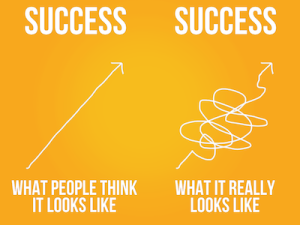
success-really-looks-likeAs you build your career, be the 5% who will follow this worthy, career-changing advice. And don’t be afraid to pass it along to others. Just don’t be surprised when they don’t listen (but be incredibly grateful for those who do… that’s when the magic happens!)

Thanks to Mark Babbitt, CEO and Founder of Youtern for this post! Mark Babbitt is a serial mentor who has been quoted in the Wall Street Journal, Mashable, Forbes and Under30CEO.com regarding job search, career development, internships and higher education’s role in preparing emerging talent for the workforce. Contact Mark on Twitter!

If you know what you want to do for a career, and are wanting to find an internship, check out Youtern. If you aren’t sure about what career to pursue, check out Career Coaching for Students, a program for college students or high school students or recent grads. Developed by corporate talent management career coaching experts – not academic counselors.

I Want to Quit (My Career)


Talent Management MagazineThe July 2013 issue of Talent Management Magazine, a respected journal for human resources executives, highlighted some new statistics that reinforce what I’ve been trying to communicate to parents, high school administrators and college and university career centers for some time now – “what you are doing isn’t working!”

Here are excerpts from the article…you be the judge


First there was the Gallup survey that came out in early June 2013, which found the majority of American employees (70 percent) were either not engaged or actively disengaged with their work.

As if that wasn’t enough to raise red flags for employers who care about and are tracking employee engagement, a new Harris survey for the University of Phoenix in Arizona that was released July 8, 2013 showed that more than half of U.S. employees want to change not only their jobs, but their careers.

Apparently, only 14 percent of workers say they’re in their dream careers.

Some of you may not be surprised to learn this feeling is more pronounced among workers in their 20’s (80 percent), but it’s certainly not specific to this demographic alone: Sixty-four percent of those in their 30s want to change careers and 54 percent of those in their 40s reported the same.

Is this the classic “grass is greener on the other side” syndrome? Maybe. Or perhaps it’s the fact that the unstable economic environment coupled with debilitating student loan debt coerced many graduates to scrounge up any kind of employment they could secure just to have a steady cash inflow. Consider that nearly three-fourths of those surveyed (73 percent) said they didn’t end up with a job they had originally anticipated when they were younger.

And before you go on a rant about how flaky millennials are, you may be surprised to learn that those in the upper echelons of corporate America are among those who want to sign up for a different career. Nearly half (43 percent) of C-level executives said they were somewhat interested in switching careers, while 26 percent expressed a stronger desire to do so.

Offering lateral moves and defining a clear career path for employees might not be the silver bullet when it comes to engagement and retention problems, but it’s a start.


Employers can’t fix this. And then there are high schools and colleges continuing to do the same things they’ve been doing for the past 10+ years, only now the high schools have teacher productivity work flow tools in the cloud (Naviance, XAP, etc.) to help track high school student college readiness tasks.

This is a wake up call. Want to decrease student loan debt? Get smarter about planning career and educational strategies. You can delegate career exploration and career matching to an overworked high school counselor with outdated assessments or delay this work until college where students are going in undeclared, changing majors 3 or 4 times and taking 5 years to graduate at a cost of thousands of extra dollars. Or you can take a proactive approach and do something different.

Better Career Planning Better Lifehttp://www.careercoachingforstudents.net

Carl Nielson is Chief Discovery Officer of Success Discoveries and Managing Principal of The Nielson Group, an organizational development consulting firm that provides executive development coaching, team development and assessments for hiring. As creator of the Career Coaching for Students program for high school students and Career and Success Skills Mastery for College Students and Recent Grads, Carl has helped thousands of students find a better way through the career exploration process that works.  Assessment and coaching packages start at $349 – checkout the Summer 2013 special offer – 30-days coaching support with the Home Study student career coaching package.