Tag Archives: choosing a career

New College Grad Survey Finds High Hopes for First Job


Reposted from Workforce Online magazine.

Despite spending most of their college years at the depths of the Great Recession, new graduates have high expectations of their earning power. About 40 percent said they expect a starting salary of $50,000 to $75,000 for their first job out of college.

The Class of 2012, soon to be spilling out of colleges and universities and applying for jobs, has high expectations for their career prospects.

In a new joint study by websites Experience and Achievers, this new batch of millennials is shown to be career-minded, loyal, brand-savvy and likely to know from the get-go at which company they want to work. Further, they’re most likely to simply pick up their smart phone and apply for a job online at that company’s website.

And apparently money isn’t everything to new graduates. Even though the Class of 2012 collectively is graduating with more debt than ever from student loans, 54 percent said career advancement opportunities were more important than salary, according to the study, which is in its third year.

Despite spending most of their college years at the depths of the Great Recession, new graduates have high expectations of their earning power. About 40 percent said they expect a starting salary of $50,000 to $75,000 for their first job out of college.

According to an annual survey by the National Association of Colleges and Employers, new grads may be aiming a bit high. Bethlehem, Pennsylvania-based NACE’s April 2012 Salary Survey report—the first report on salaries for the Class of 2012—shows the overall median starting salary for a bachelor’s degree graduate has risen 4.5 percent to $42,569 for the Class of 2012 from the last median salary of $40,735 for the Class of 2011.

“The overall median salary increase is the result of gains throughout most sectors,” says Marilyn Mackes, NACE executive director. “Even in those sectors that showed decreases in median starting salaries, the dips were very slight.”

Education and communications majors are seeing the most significant increases to their median salaries over last year. Graduates with education degrees are entering the work force with a median salary of $37,423, 4.5 percent higher than the $35,828 earned by members of the Class of 2011.

Hiring of graduates is up as well and is improving. NACE actually revised its figures upward in April, showing that businesses expect to hire 10.2 percent more graduates this year.

Razor Suleman, founder and CEO of San Francisco-based Achievers, said the study also uncovered a disconnect between statistics and reality when it comes to millennials. Twenty-two percent of respondents expect to stay with their first employer more than 10 years.

“According to the U.S. Bureau of Labor Statistics, they stay 18 months on average” in a job, Suleman says. “But that’s not what they’re telling us their intent is. They’re entering this relationship with their employer, and on average they’re telling us they want to stay for 4.7 years.”

Knowing what this new generation of workers wants vs. what they do in the workplace is an opportunity for companies to change their approach to millennials, Suleman says. Most companies tend to be stuck in the past, using antiquated notions of performance review and recognition that don’t cut it with Gen Y workers, Suleman says. For example, a gold watch after 25 years of service means nothing to them.

“Gen Y grew up being praised, getting gold stars, getting trophies just for participating,” Suleman says. “When they enter the workforce, they’re not going to change; companies need to. If you want to keep them engaged in a workplace, feedback and recognition on a weekly basis is paramount. Of the nearly 8,000 respondents to our study, 84 percent said that is what they wanted.”

Suleman adds that employer branding has never been more important to the recruiting process. The study notes that 87 percent said they would apply for their first jobs at a company website. “These students already know who you are. You need to fish where the fish are biting, which is online.”

Carl Nielson is a professional career and executive/leadership coach and creator of the nationally recognized program Career Coaching for Students™ . Career Coaching for Students is available as a district-wide high school program and through certified career coaches throughout the United States and other countries. Call Carl Nielson at 972-346-2892 to discuss specific needs.

Career Mapping Catching on in High Schools


The article Career Mapping Eyed to Prepare Students for College by Caralee J.  Adams, reviews the current state of high school student preparation strategies for researching and making career choices. I’ve pulled a few quotes and provided some comments and insights into what the reality of today’s efforts are producing.

Secondary schools are becoming more intentional about helping students discover their career interests and map out a plan to achieve them.

This effort is only as good as the foundational approach. As the article suggests, “Finding time during the school day can be a challenge, and the job of overseeing the process often falls on already stretched counselors, according to researchers and program administrators.” The assessments that schools use (see comment further down about Naviance) are not valid and can not be used in the work world to match people and jobs. Students recognize these issues quickly and consequently dismiss the entire exercise as a “waste of time”.

About half of all states mandate that schools help create individual or student learning plans, and most others have optional programs.

A student learning plan is something schools have been providing since student guidance counseling was created. Designing and attaching a student learning plan to a career direction is not something that should be done until high school. Mandating this activity has not created any measurable change that can be associated with increased post-secondary education, higher GPA or better test scores.

Enabling students to make their own plans puts them in the driver’s seat and encourages a long-term look at their course selection so their choices match their career goals, experts say.

The key here is “match their career goals”. A high school student is not equipped to make sense of the assessment results and do not have the necessary knowledge about different career paths to make decisions about career direction on their own. Schools do the best they can to expose students to different career areas but it is a shot gun approach that results in students feeling lost and/or overwhelmed.

Often, districts give students online accounts with passwords to track classes; create an electronic portfolio of grades, test scores, and work; research careers; and organize their college search.

These online accounts, including the one mentioned in the article, Naviance, have been around long enough to measure their effectiveness. Ask any student, and I really mean any student, that attends a high school with Naviance (or other online solutions) and ask them how they used Naviance. The answer I receive is “I didn’t.” or “It wasn’t helpful at all.“.

Schools, meanwhile, have not yet experienced the payback on their investment. As with many education programs, the rollout is left up to districts, creating a patchwork of approaches throughout the country.

This is a great “excuse” for the companies such as Naviance and the school administrators. A person I respect who works with at risk kids and served on a school’s trustee board and knows Naviance very well stated the online solution was “used only to help students get into a preferred college” – not to help them identify and focus on career direction.

Students create plans starting as early as the 6th grade. Of course, they can—and often do—change their minds about their career path. …Typically, a student might have a career-exploration unit in 7th grade. Through an interest inventory, in which the student answers a series of questions about preferences for working, say, with people or numbers, indoors or outside, his or her interests are matched with career clusters and pathways.

Childhood development studies clearly show that a student’s behavioral style and motivators are being established through middle school. The motivators (personal values) are set earlier. Behavioral style is in “wet cement” as students enter high school. The behavioral style and motivators are key to aligning a person’s “talent” to career options. Therefore, serious career exploration and career mapping is not useful until high school. Schools need to use a broader “exposure” strategy until high school. In high school, the focus needs to be at the individual level. That is where true career coaching is most effective. Also, did I mention the assessments used in school are not valid and reliable.

Knowing that high school students today connect best with online materials, the College Board recently launched a new interactive college-planning site, the BigFuture.org. And U.S. Sen. Chris Coons, D-Del., recently introduced a bill to pilot a project in which students beginning in 1st grade could start portable online college-planning and -savings accounts.

Students connect best with online materials? Give me a very talented teacher and the student will choose the teacher over online every time. The issue may not be the “preference for online materials” but rather a rejection of low quality teaching. With respect for Senator Coons, if we want to make college more affordable, fund the use of career coaching programs like Career Coaching for Students™  that are known to reduce the risk of changing majors in college and provide a student with an exciting personal future view that leverages their motivational and behavioral career match.

Todd Bloom, the chief academic officer for Hobsons, the Cincinnati-based company that produces Naviance, an online career- and college-readiness system, said the depth and breadth of individual learning plans are expanding, and the cost can run less than $5 per student per year. “It’s not a hard sell,” he said. “It’s socially desirable to have that vehicle. ”

And here you have the issue. School boards look at their budget and what they are “required” to provide and see online systems like Naviance as an “easy” solution to implement. Parents that are aware of the offering assume it is providing something helpful. The saying “you get what you pay for” is very applicable here. There is no hard data that shows any ROI on these “low cost” online system solutions like Naviance.

Yet a goal of the program was to increase high school graduation rates and that did not happen, said Jay Ragley, the director of the office of legislative affairs for the state. “It’s difficult to peg why we are not increasing graduation rates. That goal has still eluded the state,” he said, adding that it’s been a challenge to get parents used to the idea of career planning as early as middle school.

Until parents demand and receive better solutions in schools, I strongly recommend engaging a career coach for your high school student – as early as incoming HS Freshman rank and no later than the beginning of the Sophomore year.

Side Note from the trenches: We’ve approached school districts about integrating the Career Coaching for Students™ program as part of a high school curriculum. This program can easily fit into one class per week for a semester with other classes referencing parts of the program throughout the four years of high school. Students have access to the online career and education research tools throughout the four years. The most common statement we received as feedback: “Wow! This is exactly what we need. If we had this, we’d push our “online-only system” to middle school and have this for all of our HS students.” Our response to that: “Great! What is the next step to make this happen?” Reply: “Oh no, we’re too invested in what we have now. To go back to the school board and say we’ve got something better would not work out well for us. And besides, we know we won’t receive more funding to cover a more expensive solution.

Carl Nielson is a professional career coach, creator of the nationally recognized program Career Coaching for Students™ and managing principal of The Nielson Group, a management consulting firm specializing in hiring and selection, team effectiveness and executive coaching.

What Advice Did Successful People Receive? Sounds Like Great Advice for Teens


Business Insider.com recently posted snippets of advice that highly successful people received from mentors as they were growing and developing. As I read each one, I felt like they were speaking to teens (or should have been). Yet, the quotes were pulled from speeches, articles and interviews intended for adults already in mid-career. Since most teens don’t have Business Insider que’d up as an RSS feed I thought I’d post the quotes. You can click on the link above to go directly to the article.

Also, if you are looking for more in the “advice for success” you can find some great videos including Steve Jobs infamous 2005 Stanford college graduation commencement speech posted on the Career Coaching for Students “Got Motivation” page.

Great advice and motivation videos - best motivational videos

1. Terry J. Lundgren, CEO, Macy’s
Gene Ross, the man who recruited Lundgren at Bullock, told him: “You’re not going to do this forever. There’s a finite amount of time you’re going to be doing this. Do this really, really well. And if you do this really, really well, everybody will see that, and they’ll move you onto the next thing. And you do that well, and then you’ll move.”

2. Richard Branson, founder and chairman, Virgin Group
“My mother always taught me never to look back in regret but to move on to the next thing. The amount of time people waste dwelling on failures rather than putting that energy into another project, always amazes me. I have fun running ALL the Virgin businesses — so a setback is never a bad experience, just a learning curve.”

3. Marissa Mayer, VP, Google
“My friend Andre said to me, ‘You know, Marissa, you’re putting a lot of pressure on yourself to pick the right choice, and I’ve gotta be honest: That’s not what I see here. I see a bunch of good choices, and there’s the one that you pick and make great. I think that’s one of the best pieces of advice I’ve ever gotten.”

4. Lloyd Blankfein, chairman and CEO, Goldman Sachs
His boss at Goldman during the 1980s told him:
“First, it’s good to solicit your people’s opinions before you give them yours. And
second, your people will be very influenced by how you carry yourself under stress.”

5. Maureen Chiquet, Global CEO, Chanel
Mickey Drexler, CEO of Gap at the time, told Chiquet:
“I’m going to give you some important advice. You’re a terrific merchant. But you’ve gotta learn to listen!”

6. Tory Burch, co-founder and creative director, Tory Burch
“When I started my company, many people said I shouldn’t launch it as a retail concept because it was too big a risk.They told me to launch as a wholesaler to test the waters — because that was the traditional way. “But Glen Senk, [then] CEO of Urban Outfitters and a mentor of mine … told me to follow my instincts and take the risk. I wanted to create a new way of looking at retail.”

7. Eric Schmidt, executive chairman, Google
“Find a way to say yes to things. Say yes to invitations to a new country, say yes to meet new friends, say yes to learn something new. Yes is how you get your first job, and your next job, and your spouse, and even your kids.”

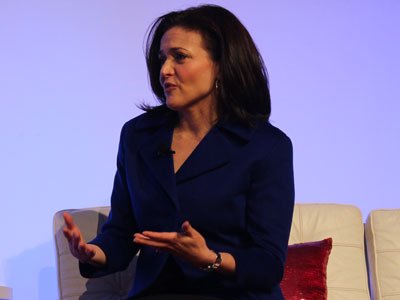
8. Sheryl Sandberg, COO, Facebook Sheryl Sandberg COO Facebook
When Sandberg was thinking she wouldn’t accept an offer to be Google’s general manager, Eric Schmidt told her, “Stop being an idiot; all that matters is growth.” She says that’s the best advice she ever got.

9. Larry Page, co-founder, Google
“In graduate school at Stanford University, I had about ten different ideas of things I wanted to do, and one of them was to look at the link structure of the web. My advisor, Terry Winograd, picked that one out and said, ‘Well, that one seems like a really good idea.’ So I give him credit for that.”

10. Howard Schultz, CEO, Starbucks
“Jim Sinegal, the founder of Costco, gave me fantastic advice because we were going down the wrong track. We brought him in to look at our plan and he said, ‘You know, I don’t want to be rude but this is exactly the wrong thing to do.’ This was my idea, and he was right. “His advice was the cost of losing your core customers and trying to get them back post-recession would be much greater than trying to find new customers, so we completely shifted.”

11. Maria Bartiromo, anchor, CNBC
“My mom says, ‘You have to have alligator skin. You can’t believe the good stuff, and you certainly can’t believe the bad stuff’ and that’s something I’ve come to accept. “So when I see someone say anything nice about me in a magazine or anywhere, I probably won’t read it, because I don’t want to be in a place where I start believing my own press releases.”

12. Richard Parsons, former chairman, Citigroup
Steve Ross, the former CEO of Time Warner, told him:
“Just remember, it’s a small business and a long life. You’re going to see all these people again.”

13. Jennifer Hyman, CEO and co-founder, Rent The Runway
“Just do it. There’s no benefit to saying, ‘I’m just doing this because it will get me to this new place,’ or ‘I’m just going to go into this analyst program because it will prep me for X.’ “If you’re passionate about something, go for it, because people are great at what they love and when they’re the happiest.”

14. Edward Rust Jr., chairman and CEO, State Farm
“[My father] had the uncanny ability with just a couple of little phrases. One: ‘You know better… don’t you,’ and ‘you can do better… can’t you.'”

15. Joe Uva, former CEO, Univision
“Always have the courage of your convictions. Always state what’s on your mind. Follow your gut. And observe what other people are doing around you.”

16. Mohamed El-Erian, CEO and co-chief investment officer, PIMCO
“I remember asking my father, ‘Why do we need four newspapers?’ He said to me, ‘Unless you read different points of view, your mind will eventually close, and you’ll become a prisoner to a certain point of view that you’ll never question.'”

17. Kenneth Burdick, president and CEO, Blue Cross & Blue Shield of Minnesota
Burdick received this message from various successful people he has met:
“Surround yourself with good people. And part of that is surrounding yourself with people who think differently than you. Surrounding yourself with people who have different experiences than you. In business, it’s all about the team.”

18. Steve Schwartzman, chairman and CEO, Blackstone Group
“[My high school] coach, a 50-year-old named Jack Armstrong … would shout, ‘Remember—you’ve got to make your deposits before you can make a withdrawal!’ …”Coach Armstrong came to mind in one of my first weeks on Wall Street, 35 years ago. I’d stayed up all night building a massive spreadsheet to be ready for a morning meeting. … The partner on the deal, however, took one look at my work, spotted a tiny error, and went ballistic. “As I sat there while he yelled at me, I realized I was getting the MBA version of Coach Armstrong’s words. Making an effort and meeting the deadline simply weren’t enough.”

19. Peter Swinburn, president and CEO, Molson Coors
“The then-big boss asked me to go and do basically a turnaround job. And he said, ‘I don’t mind what you do, as long as you don’t do what we’ve done before.'”

The Worst and Best Paying College Majors – Are we asking the right question?


Are you driven by high earning potential? I mean real money. Payscale.com recently published their 2011/2012 salary survey by college major. I guess when you have data you can do anything with it.

For some college majors, for some people, the Payscale.com survey data is meaningful. For it to be useful, it has to be a specialized major that connects (strong correlation) to a specific type of work. For example, it is likely that those who complete an undergraduate degree in Elementary Education are teaching elementary education. In that scenario, the Payscale survey is meaningful and helpful. If you are fully self-aware, understand what a career in elementary education entails (what soft skills, continuing education, etc. are required)  and see yourself as a good fit to the job/career, then you can expect to earn right around the median (geographic differences will explain most of the higher or lower pay range). Money won’t be a personal motivator for that career. However, helping others is a personal motivator for the Elementary Education Teacher career path. What that means is that the job of Elementary Education Teacher rewards “work” that helps others.

If you look at the survey list of college majors, there is one fundamental flaw. The data does not take into account what the person is doing job- and career-wise. Isn’t that the better (more valid) question? How you get there is insightful but not predictive of your potential income as much as “what” you do in your career.

I had a boss back in the ’80s by the name of Don J. Redlinger. He was actually my bosses’ boss. Don was business unit VP, Human Resources. His income, including stock options, put him on a trajectory to being a millionaire. He later was promoted to SVP, Human Resources for the entire multi-national Allied Signal corporation. He was in his 30’s at the time. What degree did Don have? A B.A. in History. Looking at the listing of college majors based on mid-career median income, Don should have been at about $69,000. If he had received a degree in Human Resources, his salary might have been around $62,600. Both are wrong. His degree was a strategic choice along with the college he went to. “What” he was doing was most important and relevant to his income. The industry he was in, and the career path he pursued are much greater predictors of income. How he got to the VP position early in his career has a lot to do with the “total package” which includes your “talent” as well as what you did back in high school, college, internships and early jobs out of college.  My learning – a B.A. degree in History can be extremely valuable across a broad range of careers. Your talent and your strategy determine how well you leverage the degree.

Let’s look at another example – a long-time colleague and client of mine, Freddye Silverman. Freddye has a B.A. degree in  Spanish and M.Ed in Spanish and Education. So what is she doing today, 20+ years since her completion of her education? She is Vice President, Eastern Region at Jeitosa Group International. She is a respected and recognized leader in the HR technology solutions field who has more than 25 years experience as a practitioner and consultant in HR IT.  Freddye also has a teaching background in foreign languages which “enhances her global view”. Prior to Jeitosa she was VP, HR Technology Solutions for Cendant Corporation.

Because she has been a long-time client of The Nielson Group (corporate consulting where we use assessments to coach professionals and executives and assist with evaluating candidates during the hiring process using assessments), Freddye has been assessed using the same assessments used in the Career Coaching for Students program. When she reads her assessment results, she quickly says, “this is who I’ve been all my life“.

We know a great deal more than we did 20+ years ago about measuring personal talent and job matching. In Freddye’s case, what we now know, if used back then, might have suggested she look at a double major, Spanish (foreign language is a passion of hers) and Business Management, specializing in IT project management. Instead of starting her career in teaching (she is “behaviorally” a good fit for teaching/training as well) she might have gone directly into a corporate environment where her income in those early years might have been higher and she would have experienced much greater passion for what she was doing.

Hierarchy of Personal Motivators

Freddye's Personal Motivators

Behavior Insights Wheel

Freddye's Behavioral Style

For Freddye to have remained in teaching (lower pay, help others), her Social motivator (see chart above) would have needed to be much higher and her Utilitarian much lower. While Freddye may not have recognized the forces at work, she has the kind of behavioral style that “easily recognizes and accepts the need for change”. She isn’t one to stay in a situation that doesn’t excite her. She made a career shift early on. Over 50% of the population (including student populations) do not have a behavioral style that can shift as easily and dramatically as Freddye’s.

Many adults are in roles they chose while in college – by default. For those where the choice was a good one (the job’s talent demands fit the person’s talent make-up) it worked out well. For those that weren’t so lucky (around 50%), the chance of watching ten or more years tick off while they feel less than fulfilled and mediocre is high. Choosing a major based on “earning potential of that major” isn’t a good strategy.

We can’t predict the future. But we can do a much better job of helping students look at careers/jobs that match their talent design (behaviors, motivators, sometimes referred to as personality). If a student has a clearer idea of what makes them excited to get up in the morning and how the work they do feels natural to them, they will be much more likely to be successful. Money is one type of reward. There are other types of rewards that are equally powerful and important for success. Look at the job or career-match to your talents rather than the income potential of a major as a first step. Then look at the possible educational strategies that will support your career aspirations. If your career choice is aligned with your talent, any major that allows you to enter that career will work.

Degrees
Degrees
Methodology
Annual pay for Bachelors graduates without higher degrees. Typical starting graduates have 2 years of experience; mid-career have 15 years. See full methodology for more.

By the way, there is no “best major” for a Sales career (see article about groundbreaking research on top performing sales professionals) yet, sales is one of the highest median income career paths. The type of sales and choice of industry are much greater predictors of potential earnings.

Best and Worst Undergrad College Degrees by Major - Are we asking the right question?

Carl Nielson is a professional career coach, creator of Career Coaching for Students™ and managing principal of The Nielson Group, a management consulting firm specializing in hiring and selection, team effectiveness and executive coaching.

Ask for a Favor


Career Coaching for StudentsMost people often hesitate to ask for help because they worry about being intrusive or appearing needy. The truth is that it’s innately satisfying to help others, and most people want to help. Adults especially enjoy helping up-and-coming teenagers that are showing personal accountability and self direction. As you evaluate potential careers, ask adults for favors.

Ask for help in finding and meeting people in your area of career interest. Asking can be a powerful way to get people become invested in your success.

Most people don’t realize the size of their network. And for those that do, very few leverage their network effectively. How large is your network? To find the answer, write down in three columns all of your friends‘ names, your family‘s names and your “professional contacts” that you can think of in a 10 minute timed period (set a timer). For example, I am considered a professional contact, feel free to put me down on your list.

Work on this list until you feel you’ve exhausted your thinking. How many people did you list? Now consider this, what if every person you wrote down had an equal number of people in their network that you have in yours? Some will have more. But let’s use your list count. Take your list count and multiply by the same number. The answer is your true available network.  For example, if you have 45 people in your list multiply 45 x 45 = 2,025. You now have a significant network that will most likely help you contact the right people in your area of career interest.

Be bold enough to use your network. They want to help.

Carl Nielson is a professional career coach, creator of Career Coaching for Students™ and managing principal of The Nielson Group, a management consulting firm specializing in hiring and selection, team effectiveness and executive coaching.

Mountain Top or Dung Heap?


Dung Heap is smelly and dirtyMy colleague Steve Straus provided this insightful thought provocation to his newsletter subscribers. Adults appreciate the distinction Steve provides around being on the Mountain Top vs. being on a Dung Heap when it comes to one’s career. But do high school students see the distinction? Are parents sensitive to the lesson’s in Steve’s message?

“There are many paths to the mountain top” is an ancient bit of wisdom which means don’t get too enamored with the path you’re on, believing it is the only way. If your path works for you, use it.

Let others choose their own, if theirs works for them. It’s an interesting thought, applicable to careers, study, leadership, and families.

However, there is a problem that many who have taken the upward journey have learned. They have discovered, once reaching the top, they were climbing a dung heap. They found themselves dirty, smelly, and exhausted, and looking ‘over there’ at the real mountain top.

Before embarking on your journey make sure of your destination.

Coaching Point: Have you been pausing periodically to take a deep breath and notice the smell of your mountain?

Carl Nielson is a professional career coach, creator of Career Coaching for Students™ and managing principal of The Nielson Group, a management consulting firm specializing in hiring and selection, team effectiveness and executive coaching.

Career Exploration Requires Developing a Personal Idea Network


TED logoSteven Johnson has a great presentation on where ideas come from that has been made available on TED. Taking his message and applying it to career exploration for high school or college students seemed like a fun exercise.

At the end of his presentation, Johnson states “chance favors the connected mind”.  Now shift your thought to people who are successful and happy in their careers. How did these people find their career? Did it come to them in a dream when they were very young? Perhaps it came to them through a high school class. Or from a discussion with one of their friends. Johnson’s research suggests eureka or light bulb moments, a single event, isn’t how people “found” their career match.

The key to success is in the connected mindInstead, Johnson makes a case for the development of an idea network in the brain that leads to “favor”. So if you can make the assumption that the hypothesis “chance favors the connected mind”  is true, you might find that most people that are in highly successful and enjoyable careers didn’t have a eureka moment. Instead, they experienced a process or journey that promoted exploration of career choices in a networked environment.

The idea of a “connected mind” for career exploration suggests the combination of self-awareness about what in the world motivates you, how you like to do things, people that can offer expanded perspective about careers and information resources such as Student Resource Central on the Career Coaching for Students website and a students’ extended social media network.

A Common Misstep
Exploring potential careers of interest comes before researching educational options including choosing a college. Many students choose a college, university or trade school based on many invalid considerations such as football team success, where friends are choosing to go or the beauty of the campus (I could go on).  Why do they do that? I see two primary reasons:

  1. No access to credible career exploration tools and strategies
  2. Effective career exploration requires work
  3. Without “credible” career exploration tools and strategies, blind faith about what that work will produce is required

What if there were personality and interests assessments that were so valid and reliable for increasing self-awareness and identifying potential career choices they eliminated the need for “blind faith”? What if that led to motivation to do the work to investigate high-potential career interests?

So you’re ready to research educational options and choose a college
One exercise that high school students can do to expand their connected mind for choosing a college is use their Facebook extended network to find students attending a particular college of interest. With Facebook for finding those students and Skype for connecting easily for a chat, it is easy to learn about a particular college or university from the inside. Even better, ask those students attending your school of interest to help you connect with students in the specific major that you are targeting.

Remember, “chance favors the connected mind”. What are the chances you are choosing a career direction and education strategy that will favor you ten years from now?

Carl Nielson is the developer of Career Coaching for Students™, the premier career exploration program for high school and college students. Nielson is the founder of Success Discoveries (www.successdiscoveries.com) and The Nielson Group (www.nielsongroup.com), a global organizational management consulting firm. Prior to consulting, he served over 20 years in corporate human resources management. He holds a degree in organizational psychology from Texas A&M University. Find Carl on LinkedIn.

If you are looking for true career coaching for students, look at http://www.careercoachingforstudents.net. We offer a high school program and college program. Are you past the college years? Check out free resources at Success Discoveries. Professional career coaching services offered.

Copyright © 2011 Success Discoveries, LLC
Career Coaching for Students™ is a trademark of Success Discoveries, LLC
Life Skills for Students™ is a trademark of Success Discoveries, LLC

Career Exploration for Students is Like Launching the Shuttle


Student Career Exploration is Like a Shuttle Launch

Launching a career and launching a rocket take the same effort

As Americans, we are fascinated by the launching of space missions by NASA. It is an incredible site to watch a launch. The size of the fuel tanks and booster rockets of the Shuttle tells you just how much energy is required at the early stages of a launch. Once speed is attained, very little is required to get the shuttle into orbit.

It’s the same with an airliner. They burn most of their fuel climbing to altitude.

Momentum is the key to a successful launch. An object in motion tends to stay in motion. And of course, an object at rest tends to stay at rest.

The sad fact is few people ever really get much momentum going in their lives and their work. It looks too hard. And they can’t seem to stick with it long enough to get to the point where less and less effort is required and more and more intended results are achieved.

It’s important to take the RIGHT action for sure. But sometimes ANY action is enough to break the habit of inertia and get things moving.

Whatever it takes to get yourself moving, do it.

For me, reading a book or listening to an inspiring or motivating audio file gets me going. Sometimes it’s a conversation with my business partners or a review of my written goals. Music in the background works, too.

The important thing is to get going. It’s an old cliché but beginning IS often half done. Finishing well may be a valuable attribute, but if you never get started, you never get a chance to finish.

Remember, you don’t have to get it right; you just have to get it going.

Career Coaching for Students™ is a program that high school students (and their parents)  find very helpful, exciting, useful and timely. It doesn’t matter if you are at the top of your class or struggling to graduate. In high school every student is at the same level regarding career direction.

If you are a parent of a high school student, or if you are a high school student with a desire to explore the possibilities of your future, I encourage you to take career exploration seriously. It won’t just happen. Like a shuttle launch, career exploration and career planning take a great deal of exploration,  testing of ideas, work, fuel, resiliency and  people. Of course you could just get lucky.

About the Author: Carl Nielson is an executive coach, organizational development consultant and career coach. He developed the program, Career Coaching for Students™ for high school students in 2005 which aligns with 100% of recently published GWU Freshman Transition Initiative guidelines. A college version was just released in June of 2010.

Parents: Guidance at School May Not Be Enough


Most parents assume that schools are providing the necessary college and career planning guidance to their children. But findings from over 10 years of research studies show that students are not getting the help they need to make good decisions about life after high school.

How Much Counseling Time Does Each Student Get?

38 minutes per year is the estimated amount of time the average student receives from a school counselor on college and career advising. This statistic is based on national averages of student-to-counselor ratios and counselor time allocation research according to a 2005 report entitled “Counseling and College Counseling in America’s High Schools” by Dr. Patricia McDonough.

This of course is an average. While the actual amount of time varies widely by school and by student, interviews with parents show that it is a large concern. Despite the best of intentions, the level of personalized guidance provided is not evenly distributed to all students.

“My child is a solid student. He isn’t at the top of his class, but he’s not struggling either. The school clearly pays the most attention to the students that standout… either at the top, or the bottom. If you aren’t in one of those groups, you fall between the cracks,” said the mother of a senior from a large Connecticut public high school.Many schools use an online Internet based program to meet career guidance requirements.

“My son is at the top of the class. If his Dad and I hadn’t been involved, he wouldn’t have received any career guidance and would have been very limited in the colleges he considered. He’s a self-starter, Eagle scout, athlete and academically successful but career and college planning requires professional and parental support. We enrolled him in a program for high school students called Career Coaching for Students™. That made a real difference for him and us.”

Not Enough Counselors… Too Many Demands

A quick look at the student-to-counselor ratios across the nation shows that there simply are not enough guidance counselors at each school to support the volume of students and all the demands placed on the counselors. Schools have used online Internet programs to fill the gap.

According to Dr. McDonough’s report, the American School Counselor Association (ASCA) recommends one counselor for every 100 students, or a 100:1 ratio. The real student-to-counselor ratio across the nation’s high schools is estimated to be 315:1. That is three times the recommended level according to the National Center for Educational Statistics (NCES).

In some states, such as California, Minnesota, Arizona and Utah, the average is well over 500:1

Counselors aren’t there to do career guidance counseling

School counselors handle issues ranging from attendance, discipline, drug and alcohol abuse, sexuality and pregnancy, suicide prevention, and personal crisis along with academic testing and a host of other administrative duties assigned to them.

Where does this leave college and career planning services? They are considered “nice to haves” in many schools because the time and resources aren’t there to support them.

Not Only a Public School Issue

The average student-to-counselor ratio in private high schools is estimated to be 241:1 according to the National Center for Educational Statistics. While this ratio is better then the public school ratio of 315:1, it is still over two times the ASCA’s recommendation of 100:1.

Even though private school student-to-counselor ratios are better, parents report that the guidance their children receive is almost exclusively focused on college counseling and placement, not on what the students will do with their education once they graduate.

TIPS FOR PARENTS
Regardless of whether your child attends public or private school, here are some tips to make sure that he/she receives the guidance needed to make wise and informed decisions about his/her future:

  • Don’t assume your child is getting enough college and career guidance at school
  • Find out what the student-to-counselor ratio is at your child’s school
  • Contact the school’s guidance department to learn what kind of personal career counseling is provided:
    • When, what and how much 1-on-1 college guidance is provided?
    • When, what and how much 1-on-1 career planning guidance is provided?
  • Talk with your child. Ask the following questions:
    • Have you taken interest, skills, values, and personality assessments at school?
    • Has the school counselor helped you understand what the assessments mean?
    • Has the school counselor met with you 1-on-1 to discuss career possibilities?
    • Has the school helped you plan your college search based on your career interests?
    • Has the school helped direct you to financial aid and scholarship opportunities?
    • Has the school discussed with your student the connection between high school class choices and the impact it will have on college admissions?

Increase the 1-to-1 support your child receives with personal career and education guidance to help your child sort through his/her best-fit choices. It’s much more affordable than you think. Is there anything more important than your child’s future success?

Carl Nielson is a professional career coach, creator of Career Coaching for Students™ and managing principal of The Nielson Group, a management consulting firm specializing in hiring and selection, team effectiveness and executive coaching. The Career Coaching for Students™ is offered throughout the country and can be organized as a local workshop. National webinars are scheduled to begin in the Fall of 2010 that combine group and individual attention. Parents are encouraged to participate with their son/daughter. Call 972.346.2892 to discuss details.

Insights for Parents: The Pressure of Choosing a Career


As a parent of a college student and a teenager in high school, one of my biggest questions in my mind is “Am I helping my children with the right information and career guidance?”  Am I helping them understand their unique talents, skills, behaviors and motivators and translate these into identifying a career path that is motivating and fulfilling for them?  

I’ve worked with many teenagers, high school and college students for several years and have gained a few insights. As a full time management consultant, executive coach and executive & student career coach and as a parent, I’m sharing “insights” that I hope are useful to parents. The focus of these insights is specific to parents of teenagers (or college students) who are struggling with helping their son or daughter with career guidance.  So instead of this being advice, please consider these, at best, my insights. 

Here are a few points to consider to reduce the pressure of Career Guidance: 

  1. Be a good listener. Listening with open ears and an open mind is one of the most powerful ways you can help your son or daughter. Listening means “not talking, telling or judging”. Listening means asking open ended questions to learn what is in the mind of your son or daughter?
  2. Observe and create an awareness of their talents and skills. Become very observant of your teenagers skills and talents in their day to day activities at home, schools and in social gatherings. Open ended discussion around these observations creates a heightened awareness among the teenager. This new awareness also motivates them to explore and learn more about these talents and skills on their own.
  3. Be understanding. Choosing a career is a process of exploration and takes time and effort. When helping your son or daughter explore their own talents and the potential careers that will be a good fit, don’t push for an immediate decision, it has to evolve over time in the mind of your child. Choosing a career is not a healthy objective in the short term. A better “parental objective” is to support your son or daughter in exploring their interests, attitudes, motivators (self awareness) and the careers, industries, companies and people that might help them “find” their place in the world. Developing a strategy that ensures they are positioned to pursue the best career for them is an admiral goal and a less frustrating proposition for you and your child.
  4. Approach career exploration as a fun journey. The journey is as certain as life itself. To make career exploration fun means eliminating all of the things that makes it not fun. We parents are very good at telling. Please don’t tell when it comes to career exploration. Parents are very good at sharing their opinions. Please avoid sharing your opinion until your teenager asks for it. Offer support in whatever way your son or daughter wants that support. Remind yourself often how intimidating an exercise this is for son or daughter. Remind them that you were totally blind about careers, that you had no idea how to go about exploring and choosing a career when you were their age and that you were intimidated by the thought of “choosing a career”. Help them create an environment that puts them in control. Within that general guideline, do not allow your son or daughter to put it off (a natural occurrence when we feel intimidation, fear, and incompetent). With little effort, they can learn a lot during the high school years that will put them way ahead of most college students.

You’ll end up turning your frustration into fun and excitement when you watch your son or daughter talk, act and succeed with passion because they own their career choices. This way they not only find their career choices, but are very excited about it and motivated to go the extra mile to succeed. 


Carl Nielson is the developer of Career Coaching for Students™, the premier career exploration program for high school and college students. Nielson is the founder of Success Discoveries (www.successdiscoveries.com) and The Nielson Group (www.nielsongroup.com), an international corporate organizational management consulting firm. Prior to consulting, he served over 20 years in corporate human resources management. He holds a degree in organizational psychology from Texas A&M University. Find Carl on LinkedIn.   Carl speaks to groups on request and offers parent webinars and seminars for communities. 

If you are looking for true career guidance for a student, check out http://www.careercoachingforstudents.net. Are you past the high school and college years? Check out resources and services at Success Discoveries. Professional career coaching services offered.    

Copyright © 2010 Success Discoveries, LLC
Career Coaching for Students™ is a trademark of Success Discoveries, LLC
Life Skills for Students™ is a trademark of Success Discoveries, LLC