Category Archives: student career counseling

Carl Nielson to Conduct National Webinar – Student Career Exploration Seminar – for student and parent


Better Career Planning Better LifeWe’re calling it an Extravaganza!

Two 3-hour webinars (time will go by very fast), one 1-on-1 personal tele-coaching session (for student and parents), student binder, over 70-page Talent Profile, and much more.

We’re putting everything a high school student needs for career exploration, choosing majors, choosing schools, choosing career options and strategic academic planning into this program. And we’re doing it in an engaging way for students.

No classroom. Participate from the most comfortable seat in your house. Webinar dates have been set: Part One – Sat. July 18, Part Two – Sat. July 25.
To learn more go to http://tinyurl.com/2015studentcareerwebinar

Before you choose a career, Choose to be a Linchpin


Linchpin by Seth GodinSeth Godin published a book in 2010 called Linchpin which quickly became popular. This article is dedicated to his teachings from the book – mostly quotes from the book. I encourage any high school student to buy the book and read it. If you are a parent of a student, read it. If you work in the home or outside the home, read it.

In the book, Godin positions work by first stating “The job is what you do when you are told what to do. The job is showing up at the factory, following instructions, meeting spec, and being managed. Someone can always do your job a little better or faster or cheaper than you can. The job might be difficult, it might require skill, but it’s a job.

On the other hand, your art is what you do when no one can tell you exactly how to do it. Your art is the act of taking personal responsibility, challenging the status quo of your own work, and influencing change in people and processes to achieve goals.

Godin shifts our perspective. He calls the process of doing your art ‘the work.’ It’s possible to have a job and do the work, too. In fact, that’s how you become a linchpin.  The job is not the work.”

Art isn’t only a painting. Art is anything that’s creative, passionate, and personal. And great art resonates with the viewer, not only with the creator.

What makes someone an artist? Godin states that he doesn’t think it has anything to do with a paintbrush. There are painters who follow the numbers, or paint billboards, or work in a small village in China, painting reproductions. These folks, while swell people, aren’t artists. On the other hand, Charlie Chaplin was an artist, beyond a doubt. So is Jonathan Ive, who designed the iPod. You can be an artist who works with oil paints or marble, sure. But there are artists who work with numbers, business models, and customer conversations. Art is about intent and communication, not substances.

An artist is someone who uses bravery, insight, creativity, and boldness to challenge the status quo of their work. And an artist takes personal responsibility.

That’s why Bob Dylan is an artist, but an anonymous corporate hack who dreams up Pop 40 hits on the other side of the glass is merely a marketer. That’s why Tony Hsieh, founder of Zappos, is an artist, while a boiler room of telemarketers is simply a scam.

Tom Peters, corporate gadfly and writer, is an artist, even though his readers are businesspeople. He’s an artist because he takes a stand, he takes the work personally, and he doesn’t care if someone disagrees. His art is part of him, and he feels compelled to share it with you because it’s important, not because he expects you to pay him for it.

Art is a personal gift that changes the recipient. The medium doesn’t matter. The intent does.

Art is a personal act of courage, something one human does that creates change in another.

The secret to being wrong isn’t to avoid being wrong! The secret is being willing to be wrong. The secret is realizing that wrong isn’t fatal.

Here’s the truth you have to wrestle with: the reason that art (writing, engaging, leading, all of it) is valuable is precisely why I can’t tell you how to do it. If there were a map, there would be no art, because art is the act of navigating without a map.

The dimension of work that has a map isn’t where your art is applied. Your art is applied where the map stops.

Perhaps your challenge isn’t finding a better project or a better boss. Perhaps you need to get in touch with what it means to feel passionate. People with passion look for ways to make things happen.

If you are deliberately trying to create a future that feels safe, you will willfully ignore the future that is likely.

At the age of four, you were an artist. And at seven, you were a poet.

The lizard brain is hungry, scared, angry, and horny. The lizard brain only wants to eat and be safe. The lizard brain will fight (to the death) if it has to, but would rather run away. It likes a vendetta and has no trouble getting angry. The lizard brain cares what everyone else thinks, because status in the tribe is essential to its survival.

A squirrel runs around looking for nuts, hiding from foxes, listening for predators, and watching for other squirrels. The squirrel does this because that’s all it can do. All the squirrel has is a lizard brain.

The only correct answer to ‘Why did the chicken cross the road?’ is ‘Because it’s lizard brain told it to.’ Wild animals are wild because the only brain they posses is a lizard brain.

The lizard brain is not merely a concept. It’s real, and it’s living on the top of your spine, fighting for your survival. But, of course, survival and success are not the same thing.

The lizard brain is the reason you’re afraid, the reason you don’t do all the art you can, the reason you don’t ship when you can. The lizard brain is the source of the resistance.

Discomfort brings engagement and change. Discomfort means you’re doing something that others were unlikely to do, because they’re hiding out in the comfortable zone. When your uncomfortable actions lead to success, the organization rewards you and brings you back for more.

If you need to conceal your true nature to get in the door, understand that you’ll probably have to conceal your true nature to keep that job.

Transferring your passion to your job is far easier than finding a job that happens to match your passion.

…Treasure what it means to do a day’s work. It’s our one and only chance to do something productive today, and it’s certainly not available to someone merely because he is the high bidder.

A day’s work is your chance to do art, to create a gift, to do something that matters. As your work gets better and your art becomes more important, competition for your gifts will increase and you’ll discover that you can be choosier about whom you give them to.

The competitive advantages the marketplace demands is someone more human, connected, and mature. Someone with passion and energy, capable of seeing things as they are and negotiating multiple priorities as she makes useful decisions without angst. Flexible in the face of change, resilient in the face of confusion. All of these attributes are choices, not talents, and all of them are available to you.

The tragedy is that society (your school, your boss, your government, your family) keeps drumming the genius part out. The problem is that our culture has engaged in a Faustian bargain, in which we trade our genius and artistry for apparent stability.

The problem with competition is that it takes away the requirement to set your own path, to invent your own method, to find a new way.

As our society gets more complex and our people get more complacent, the role of the jester is more vital than ever before. Please stop sitting around. We need you to make a ruckus.

You cannot create a piece of art merely for money. Doing it as part of commerce so denudes art of wonder that it ceases to be art.

…the greatest shortage in our society is an instinct to produce. To create solutions and hustle them out the door. To touch the humanity inside and connect to the humans in the marketplace.

Not only must you be an artist, must you be generous, and must you be able to see where you can help but you must also be aware. Aware of where your skills are welcomed.

When you set down the path to create art, whatever sort of art it is, understand that the path is neither short nor easy. That means you must determine if the route is worth the effort. If it’s not, dream bigger.

I think art is the ability to change people with your work, to see things as they are and then create stories, images, and interactions that change the marketplace.

The combination of passion and art is what makes someone a linchpin.

A brilliant author or businesswoman or senator or software engineer is brilliant only in tiny bursts. The rest of the time, they’re doing work that most any trained person could do.

If you can’t be remarkable, perhaps you should consider doing nothing until you can.

The reason you might choose to embrace the artist within you now is that this is the path to (cue the ironic music) security.


Carl Nielson is Chief Discovery Officer of Success Discoveries and Managing Principal of The Nielson Group, an organizational development consulting firm serving businesses ranging from Fortune 100 multi-national corporations to small family-owned businesses. As creator and master trainer of the Career Coaching for Students program for high school students and Career and Success Skills Mastery for College Students and Recent Grads, Carl and his team of licensed facilitators across North America have helped thousands of students find a better way through a career exploration process that really works. Professional-grade assessments and co-directed career exploration coaching packages start at $399. Local public workshops, distance-coaching and in-school programs available. Call for more information at 972.346.2892 or submit an inquiry here:


Go back

Your message has been sent

Warning
Warning
I am a(required)

Warning
Warning
Warning

Warning.

Should Career Coaching Be Mandatory Curriculum Like Math and English in High School?


Better Career Planning Better LifeWe receive incredibly positive feedback from clients, those parents AND students, that experience the Career Coaching for Students program. We also consistently hear the same comment: “this needs to be mandatory in high school.”

When we talk to school counselors or administrators, we’re told they are adequately addressing career development.  Using the Texas Essential Knowledge and Skills for Career Development for Career Development as a guidepost,  we find defined requirements for Middle School (7th – 8th grade) and High School (11th – 12th grade).

In middle school, it appears from the TEKS Career Development regulations that the middle school requirements “resemble” the Career Coaching for Students™ program which enables the student to move on to the TEKS high school requirements. Neither are mandatory, only recommended. However, we strongly believe 7th graders are not prepared or capable of gaining enough value from the middle school recommended focus, especially assessments for career matching. Generally speaking, focusing on career exploration in middle school is a great start and appropriate. Assessing students at that age may not be a good idea and will likely create more confusion than value, especially considering the assessments most middle schools may be using. However, providing a portal of high-quality career exploration links for middle students to learn about different careers can energize students. But every high school student we have in our program says the same thing, “I never received anything like this in school” and “I don’t remember anything from what we did in middle school.”

Talking with Career Development Directors in Texas, we hear a consistent statement, “The Career Coaching for Students program is exactly what we need in high school. If I could, I’d leave the Kuder program to middle school level and make Career Coaching for Students™ the standard curriculum for high school students starting in 9th grade.”

We have found the following formula for career development curriculum is very powerful:

Middle School – Use our Student Resource Central web portal of career and education exploration. Create a lesson plan that takes the student through career exploration TEKS requirements using Student Resource Central.

High School – Implement a four-year career development curriculum that starts at the beginning of 9th grade, and uses the Career Coaching for Students program as the foundation. Train all counselors in the use of the program. Train teachers who are passionate about career exploration to deliver the curriculum.

So, here are some pros and cons for implementing a more focused and tangible career coaching program for high school students. Consider these along with your own thoughts and experiences and then answer our poll question below (poll open for one week starting 1/15/2015). Please share on all of your social media so we can get a large sample size for the poll.

Pros of Implementing a Mandatory Career Coaching Curriculum for all High School Students

  • By starting at the incoming 9th grade level (perhaps even the August before school starts) the program helps with 4-year high school course planning that aligns with post-secondary desires
  • Greater self-awareness comes at the right age to leverage the insights gained
  • Increased self-confidence enables the student to pursue a more challenging academic schedule
  • Greater clarity about high-potential career possibilities (a high-quality short list that matches their talents/personality traits) empowers student self-direction.
  • Less missteps towards high school graduation
  • Lower dropout rates
  • Greater student engagement that results in higher average GPA
  • Higher percent of students enrolling in post-secondary education

Cons (based on what I’ve heard or what was implied)

  • Already too many academic demands, no time to add more class time
  • Not needed – time, money and attention need to be allocated to other more important things
  • Already appropriately covered in middle school, don’t see the need to duplicate
  • We’re already doing a good job in this area, don’t need to improve
  • We don’t have the budget for it
  • Better to let families address this rather than handle in school

7 Things Any High School Student Needs to Effectively Compete


There is a great deal of advice when it comes to students preparing to compete in the global economy. Showcasing your abilities properly has now become more complex – and more critical. For example, a resume is a strategic tool designed to give you the edge over other applicants (for summer jobs, internships, and eventually that first job after school). When you use a Google search for resume writing, you receive 12.7 million hits. For most students, thinking about writing a strong resume is a “just-in-time” exercise. For many seniors in high school, that [strong resume] train has already left the station.But regardless of where the student is in their journey, it is never too late to start.

A resume reflects what has been. Students that have a desire to be competitive a few years from now need to be thinking about how they want their resume to look starting in their freshman year of high school. A resume matters when applying to colleges, especially the more academically elite colleges. A resume matters when you try for the internship that 500 other students are going for and there is only one position available. A resume matters when you are about to graduate from college and are trying to get interviews with the better employers. But the strength of the content of that resume starts with the beginning of secondary education – or earlier.

It only makes sense that the better employers are looking for the better students. GPA is only one measure and it may not be the main one.

News bulletin: Your grades aren’t the beginning and end to creating opportunities.
When writing resumes, a strong GPA is a great attention grabber but it is only a beginning. According to Heather R. Huhman, a Glassdoor career and workplace expert, experienced hiring manager, and founder & president of Come Recommended, a content marketing and digital PR consultancy for job search and human resources technologies, many of today’s job seekers tend to forget to include the things they’re passionate about or experiences they’ve gained outside of their academic accomplishments.

For many students, thinking beyond next weekend can be challenging. The reality is many students find themselves scrambling about their second year of college because they don’t have many things to list on their resume. Getting through school is the minimum you are expected to do. It is all the other things you do – or don’t do – that will determine your competitiveness – and the quality of your future opportunities.

So you have a 4.0 and you are in the top 5% of your high school graduating class ranking. With nothing else to add, you will likely not have as many options when it comes to college application acceptances, internships and ultimately those “first job” offers upon graduation from college. A strong GPA is valuable but it isn’t any where nearly as valuable as a high GPA and several extracurricular achievements.

Freshman in high school have the best opportunity for setting the stage for having a “totally awesome” resume that will pay big dividends to stakeholders of “You Inc.”. And by the way, you (the student) are the majority stockholder in You, Inc.

So here are 7 things you can do in high school (besides getting good grades and participating in extracurricular school programs – which you need to do as well):

1. Build a professional website, blog or online portfolio.

Online PortfoliosOne of the things that seems to impress employers when they research candidates is whether the individual has a professional website or blog. In the online information portal called Student Resource Central, an entire category is dedicated to Social Media and Online Portfolios. The top 14 online tools are listed –  some you might be aware of, and some so cool you must use them.

If you’ve created a professional website to showcase your knowledge, passions, expertise and accomplishments, you should definitely include a link to your website or portfolio in your future resume. Starting in high school and adding to it each year will set you apart from the competition.

2. Social media accounts.

Facebook Find Us LogoYour social media presence is another important element. When using social media, be mindful of what you showcase. Ideally, keep your social media clean of controversial language, political views and immature content. Start thinking like a professional. Assume anyone considering you for college admission, internships or job opportunities will find your content.

3. Entrepreneurial Freelance projects.

Employers value entrepreneurial experiences. Use any freelance opportunities to help you shine. One high school student turned a photography hobby into a revenue producing part time job. According to a survey of Generation Y workers (those ages 18-29), the third-most common college major for that group is “entrepreneurial studies,” and there are now 2,364 post-secondary institutions offering entrepreneurship and small business programs. Even if these students don’t become an entrepreneur, chances are they may go on to get a job with a young, venture-backed company or work for an established corporation that places high value (higher starting salaries) for entrepreneurial behaviors.

Showcase your freelance experience in your resume. Keep track of your accomplishments and people/organizations you’ve worked with.

4. Awards or special recognition.

BSA Eagle Scout BadgeGirl Scouts Gold AwardHave you received special recognition for being an outstanding contributor? You are in control of this more than you may think. Look for intentional ways to be recognized through your volunteer work, such as tutoring younger students, or through structured programs such as achieving the rank of Eagle scout in the Boy Scouts of America or the Gold Award in the Girl Scouts or by acts of service in your church or community. Plan to graduate with honors in high school and college. You will want to include these accomplishments and awards in your resume.

5. Certifications.

Project Management CertificationJob seekers who have certifications in a specific tool or skill or knowledge area can definitely benefit from including those items in their resume. Very few students see this one. A friend of mine helped his daughter study for and pass several certification exams, normally designed for professionals, before she entered college. Many certifications require some kind of experience or completion of a related project as evidence of applicable knowledge. You don’t have to be employed in a traditional job to meet these requirements. Search out the opportunity or ask those adults in your network for support. An industry-specific or career-specific certification will definitely help you stand out.

6. Side projects.

Girl Scouts project for Gold AwardSimilar to freelance work, side projects are a type of structured work that has timelines and outcomes. But they may not be tied to revenue. Volunteer work or helping your parents in the family business can be very powerful. For Eagle Scouts or Gold Award recipients, a project is required to receive the award. Be sure to include these projects, not just the award. Look for ways to claim significant accomplishments in your personal life and definitely include them on your resume.

7. Volunteer work.

student volunteersLook for opportunities to volunteer. Through school, many clubs or honors programs require volunteer work. Try volunteering every Saturday at a local food bank for the summer Are you into a particular sport? See if you can be an assistant coach on a youth recreation league (and get certified to be a youth coach while you’re at it). Look for unpaid internships too.  Volunteer experiences such as these can help you make a very strong impression on admission counselors or employers. Volunteer work also shows employers you have leadership and project management skills.

Carl Nielson is Chief Discovery Officer of Success Discoveries and Managing Principal of The Nielson Group, an organizational development consulting firm serving Fortune 100 company clients. As creator and master trainer of the Career Coaching for Students program for high school students and Career and Success Skills Mastery for College Students and Recent Grads, Carl and his team of licensed facilitators across North America have helped thousands of students find a better way through a career exploration process that works.  Self-directed assessment and career exploration coaching packages start at $399. Local public workshops, distance-coaching and in-school programs available. Call for more information at 972.346.2892.

What’s the Key to Success in Life?


success-really-looks-likeBelow is a link to over 80 people’s responses that address a burning question:  “What would you say if a teenager walked up and asked you: What’s the key to success in Life?” The question drew over 80 responses very quickly from professionals in a wide range of professions. Try using the compiled list of responses as a discussion topic with teenagers. If you are a teenager, try this exercise:

  • Highlight the top four responses (your favorites). Why were they your top four?
  • Were there similarities based on gender or cultural background, etc.?
  • Of your top four, what industry or job did the respondent list?
  • Which responses did you not like? Why?

Download the “response paper” here

Supporting teenagers to find their own voice in the world is what Career Coaching for Studentstm is all about. Let me know if you’d like more information.

My best,
Carl Nielson
Founder and Chief Discovery Officer
carl@successdiscoveries.com
Career Coaching for StudentsTM
a Success Discoveries program
(972) 346-2892

What is the ROI Value for Career Coaching in High Schools?


Supply vs Demand for Student Career Coaching?A posting on LinkedIn’s Life Coaching Teens and Young Adults asked for advice on pricing coaching services to schools. That started my brain thinking about the pricing formula I typically use for in-school, school-partnership, public workshop and private one-on-one programs using the Career Coaching for Students program.

Pricing – and value/ROI – for high school career counseling and coaching is very interesting and important. I certainly don’t have a definitive answer for other coaches but I’d like to share a few discussion thoughts, one formula for pricing and compare that to the per-student cost to deliver a one-semester course.

Note: All examples in this article use “typical” data but a specific proposal always gives consideration to the client’s needs and how the program being delivered is customized to meet that need.

Pricing vs Value/ROI vs Demand

In my corporate work, I have a minimum day rate of $3,500 as a starting point. That fee is neither high nor low, more likely it is about in the average for a consultant/coach to deliver a day’s worth of work in a corporate setting and includes costs such as assessments, books and other supporting materials. If the number of people participating is larger than 15 the fee goes up based on value and expenses on a per-person basis.

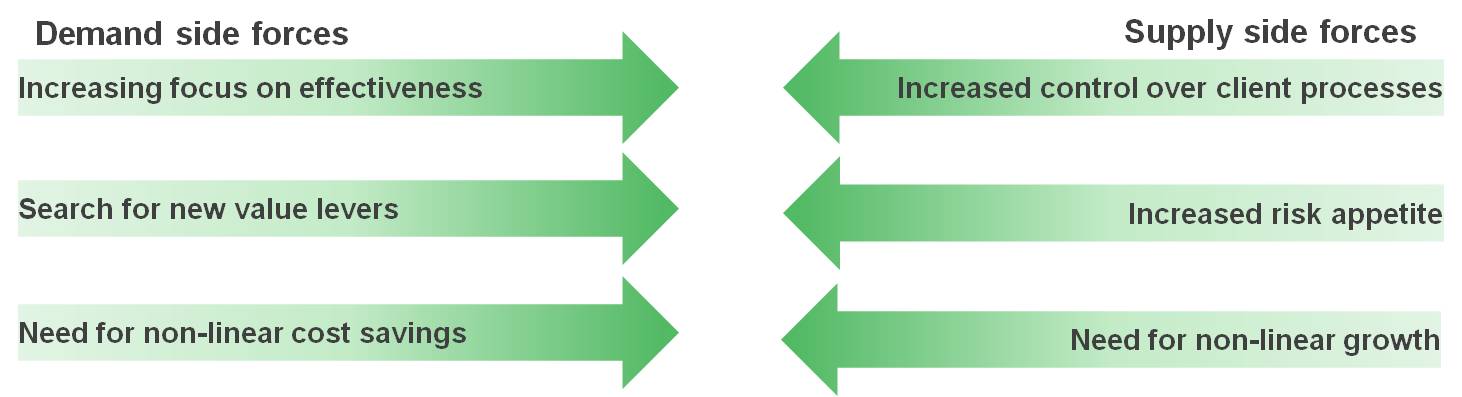
Deal-Demand-and-Supply-ForcesFor example, I am about to kick off a high-potential coaching program for 15 employees of a large multinational corporate business unit that includes an opening 2-day program, four months of one-on-on coaching and a closing 2-day program for a fee of $55k+. What does this have to do with schools/colleges? I think I have a lot to offer to schools. I would love to be full-time in that venue. Unfortunately, corporate clients tend to value my services greater. The irony is that if an education institution went all-in with say a thousand students in my Career Coaching for Students program over a 4 year contract, the math would work out ok for me (not great but doable). Most school administrators and college career centers think on a much smaller scale – especially when it comes to outsourcing a service they want to deliver with in-house teaching staff. From my information, the in-house staff model is failing – resulting in a great deal of wasted $$ and low-to-no benefits for the school or the student.

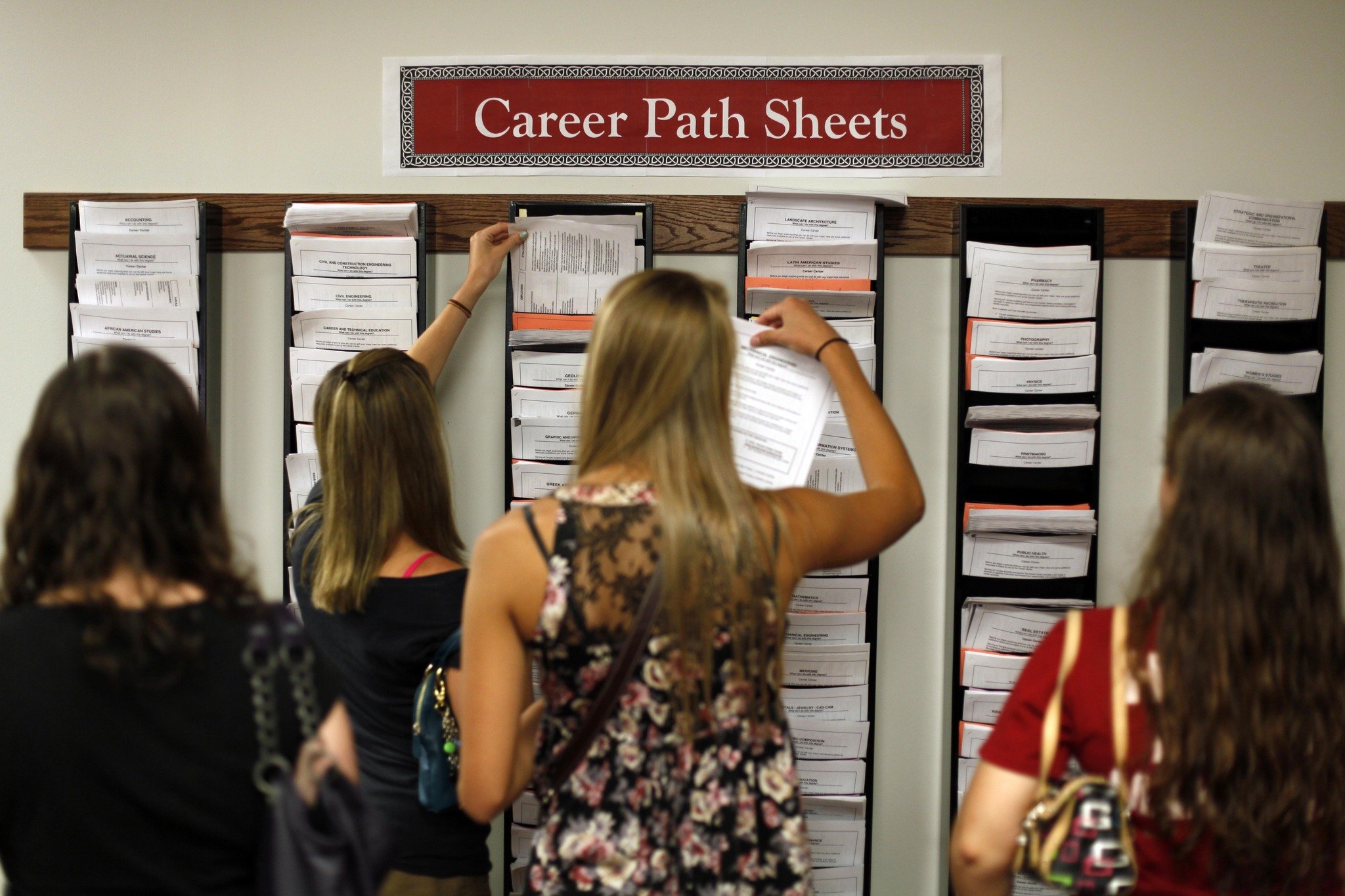
College-Students-Following-The-Career-Path-SheetsAt the college level, student participation in a college’s career exploration coaching service within the career center is less than one percent of the college’s student population according to several articles and social media postings by Career Center Directors. One thing we know is that students will recommend or not recommend to their friends based on a program’s value – regardless of if it is free or fee-based. If a program isn’t growing and the value isn’t driving demand, it is likely not being recommended by students to students. Having less than one percent participating in a service tells me students are “not” recommending the offered program to their friends. With a low participation rate, college presidents decide to fund other programs. But the need for credible career coaching remains a “big” need as evidenced by the “average” number of changes in majors per student in college and the average number of semesters to graduate with an undergraduate degree.

For those of us in the coaching profession, there is great economic diversity. Some professional coaches are the primary bread winner in the family. Others provide coaching services as a secondary and discretionary family income. If you fall in that latter category of “discretionary income” coaching, you might look at volunteering. If you don’t need income to live on and are in a position to do volunteer work, volunteering is a great and noble thing to do. Many high schools and colleges may consider you but you may also find trying to volunteer to be as frustrating as pricing for your services. I see too often those in the coaching profession who have the spouse’s income providing for the primary financial needs of the family. The need to price professionally isn’t as great and consequently, there is a low-ball pricing mentality. My opinion is that our passion for coaching (serving the needs of others) shouldn’t dictate our pricing strategy. I suggest you try to identify what the benefits will be for the client and price based on value – not based on a minimum income requirement.

A Pricing Formula for In-School Offering

The following is a general formula that I use for nonprofit/education institutional pricing proposals. My belief is that I either choose to volunteer or I choose to propose a professional solution that adds real value and price the proposal accordingly.

Sample educational institution pricing formula for Coaches:

  1. Calculate a desired hourly rate. What annual amount of income from coaching are you wanting? In other words, how do you value yourself in this profession on an annualized basis? Example: Let’s say you have a goal of $50,000 per year from coaching. And you think, “if I reach my ‘goal’ of 30 hours per week (pretty much full time), I will be pleased”. That equates to $50,000/2080 hours = $24.00 per hour (nothing for vacation, insurance, home office expenses).
  2. Double the hourly rate. This covers your personal expenses, taxes – any general costs of doing business and time for marketing to this client = FINAL HOURLY RATE.
  3. Determine all program delivery expenses (student materials, reproduction costs, etc.). Calculate down to the per student cost.
  4. Calculate the Total Program Delivery Rate. How many hours for delivery + how many hours for prep = Total Hours. Take Final Hourly Rate x Total Hours = Total Program Delivery Rate
  5. Calculate Total Raw Cost. Multiply # of student participants x per student cost =  Total Raw Cost
  6. Calculate Total Cost. Multiply Total Raw Cost x 1.25 = Total Cost
  7. Calculate Proposal Amount. For Small one-class proposal: Add Total Program Delivery Rate + Total Cost for a Proposal Amount.
    For a Large, multi-class calculation: [Total Program Delivery Rate x # of classes of 25 students] + Total Cost = Proposal Amount

Program Benefits and Goals:

For fun, let’s test this with a program called Career Coaching for Students delivered in a high school class room setting for one semester (http://www.careercoachingforstudents.net):

Better Career Planning Better LifeThe expected benefits need to be articulated and assigned measures that we can refer to later. Here is a short list of expectations for the Career Coaching for Students program:

  • Higher overall student academic engagement
  • Lower drop out rate
  • Greater percent of students with a plan for post-secondary education
  • Higher average class GPA at graduation
  • Higher SAT/ACT test scores.
  • Less higher education costs for students and parents (due to less changing majors and graduating on time from post-secondary education).

Applying the Pricing Formula – A Simple Example for the Coach

  1. Annualized net personal income goal: $50,000 = $24 per hour
  2. 2 x $24/hour = $48 hourly rate
  3. Program Delivery Expenses per student (binders, assessments, online student resource center):
    $129 for 50 students
    $99 for 350 students (we can lower costs dramatically when we have higher quantities, plus customize the binder with the school’s name and mascot)
  4. Program design.
    One class time per week for a semester for a class of 25 students.
    15 weeks per semester = 15 delivery hours for 25 students = .6 hours per student PLUS prep hours of 10 hours (rounds up to 1.0 hour per student)
  5. Total Program Delivery Rate
    $48 x # of hours (25 students = 25 hours in this example) = $48 x 25 = $1,200 Total Program Delivery Rate
  6. For a smaller program of 50 students: 25 students x $129 = $3,225
    For a larger program of 350 students: 350 x $99 = $34,650
    =Total Raw Cost
  7. Total Cost
    For smaller program: $3,225 x 1.25 = $4,031 one class of 25 students
    For larger program: $34,650 x 1.25 = $43,312 for 14 classes of 25 students
  8. Proposal Amount
    For one semester, one class of 25 students: $1,200 + $4,031 = $6,231
    For one semester, larger program of 350 students, 14 classes:
    $34,650 + 43,312 = $77,962

Analyze for Cost/Value Proposition:

Career Coaching for Students offered in-school:
Small one-class program cost per student: $249
Large program, multi-class cost per student: $223

To compare, as a publicly offered program to families, we average around $500 per student in a group workshop setting of 10 – 15 students for a 12 – 15 hour program. One-on-one for the CCfS program (about 12 – 15 hours) is $750+ per student (higher on the East and West coasts).

vs the Cost for One Teacher-Delivered Course in High School

What is the cost per student for any high school course? To be more exacting you could do the following calculation:

Teacher hourly salary rate x [# of hours for class + # of prep/support hours]

or  use a simpler calculation:

Teacher annual salary ($57,000) divided by # of classes taught over two semesters (14) divided by average # of students in the class (25)
References
http://money.usnews.com/careers/best-jobs/high-school-teacher/salary
http://new.every1graduates.org/wp-content/uploads/2012/03/OVAE_Cost_of_SLCs_Final_Balfanz.pdf

Teacher-Delivered Cost per Student

Teacher = ($57,000 / 14)/25 = $162 per student per class.
Of course adding school payroll burden for benefits and retirement of approximately 30% = $162 x 1.30 = $211 per student as a minimum. Double that to cover physical buildings and staff overhead which brings the teacher-delivered cost per student per course up to a more realistic $422 per student per course.

Your Pricing

Based on teacher-delivered pricing, you have room to price your offering in a way that is a win-win for you and the school. Keep in mind you are being given the facilities within the school and you are benefiting from the administrative overhead and lower overall marketing costs so it is not realistic to set a price of $422 per student for your offering. The price you want to stay closer to is the $211 per student for  a work agreement of 15+ students on one or two scheduled days per week.

Doing single student counseling/coaching with a school district? You need a contract based on multiple students in a semester that you will be providing one-on-one services to. That might be an estimate but at least you see what kind of interest, if not commitment, the school district has in using you.

Carl Nielson is Chief Discovery Officer of Success Discoveries and Managing Principal of The Nielson Group, an organizational development consulting firm serving Fortune 100 company clients. As creator and master trainer of the Career Coaching for Students program for high school students and Career and Success Skills Mastery for College Students and Recent Grads, Carl and his team of licensed facilitators across North America have helped thousands of students find a better way through a career exploration process that works.  Self-directed assessment and career exploration coaching packages start at $399. Local public workshops, distance-coaching and in-school programs available. Call for more information at 972.346.2892.

Do I Need to Have A Career Plan in High School?


dream-job-nextexitThe old saying “what you don’t know won’t hurt you” means if you do not know about a problem, you will not be able to make yourself unhappy by worrying about it. That belief is supported by the belief “ignorance is bliss“.

When it comes to creating/having a career plan, focusing on it (worrying about it) will actually create a great deal of happiness, help you avoid major stress and save you (and/or your parents) thousands of dollars. Based on almost daily news, the amount of college loan debt has escalated to levels considered very dangerous for our economy and for individuals. Having excessive education loan debt is a personal accountability issue – not a national economy issue.

How much debt do you want or plan to have when you graduate college? According to an article in the Huffington Post, “the average college graduate obtained a degree in 2012 with $29,400 in student debt, up from $18,750 less than a decade before in 2004, according to a new report.” To avoid unnecessary costs (which frequently ends up becoming debt) during college, avoid changing majors and choose the right college or university for you. If you are unsure about a career direction and go into college as an “undeclared major” you are likely to not have any revelations about a career direction by the end of your Freshman year. Whether you put it off or tackle career planning in high school, the only way to avoid unnecessary expense and find true happiness is to do the career planning work.

So, the short answer to the question, Do I Need to Have a Career Plan in High School?, is that you need to be doing the work of creating a career plan. The Career Coaching for Students program looks at this work as developing Decision Making skills. Decision making is a recognized skill of highly successful people and happens to be one of the weakest skills for incoming Freshman in college. You don’t necessarily need to have made a career decision but you need to be well on your way to identifying and understanding your career interests and the strengths, weaknesses, opportunities and threats associated with your career interests.

A career plan is the reward for the work you’ll do to determine your skills and interests, what career best suits your talents, and what skills and training you need for your chosen career.

By developing a career plan, you can focus on what you want to do and how to get there without worrying and without unnecessary expense. To do this well, you must start with a “professional-grade assessment” that helps you understand your personality strengths. Career planning is only one benefit of using assessments to become much more self-aware.  You’ll also find you will have a better understanding of your skills and experiences to discuss with potential employers (on your resume and in future interviews).

To eventually have a defined career goal, get started now.

A career goal can be a specific job you want to do — such as doctor or teacher — or be a particular field you want to work in, such as medicine or education.

Rather than limiting your future, a career goal may help you discover career possibilities you wouldn’t have thought of otherwise. There are several job possibilities with any chosen career. For instance, if you choose a medical career, you may want to be a scientist, a nurse, or a doctor.

A career goal can also guide you into doing what you want with your life.

  1. Become Self-Aware.
  2. Identify Career Interests.
  3. Narrow your career interests to a top two or three.
  4. Determine what you need to do to prepare for your chosen career.
  5. Besides the right college major, do you need special training? Some careers need the specialized training but don’t require a college degree. If so, find out what schools offer the training you need. Also, determine what kind of experience will you need to be successful in the career. Consider an internship as a way to get work experience in the career field.
  6. Write your career plan.  Use online tools to help you create a visual career plan.

Carl Nielson is Chief Discovery Officer of Success Discoveries and Managing Principal of The Nielson Group, an organizational development consulting firm serving Fortune 100 company clients. As creator of the Career Coaching for Students program for high school students and Career and Success Skills Mastery for College Students and Recent Grads, Carl and his team of licensed facilitators across North America have helped thousands of students find a better way through a career exploration process that works.  Self-directed assessment and career exploration coaching packages start at $399. Local public workshops, distance-coaching and in-school programs available. Call for more information at 972.346.2892.

Internships – So You Didn’t Get One This Year


State of Internships InfographicEvery college student knows about internships. It’s the thing to do – right? So in the Spring of your freshman year you attend career fairs, visit the Career Center on campus, create a resume, do a little research to see if there are any available internships and call it a day after finding out employers only talk to upcoming juniors and seniors.

So your sophomore year you go in a little smarter, prepared to “find” the internship opportunity that eluded you after your first year. Now, you “qualify” since you will be an incoming junior. All engines at full throttle! Then you find out all the internships are going to “incoming seniors” (this year’s juniors). Once again you are locked out.

Here are some interesting statistics from the infographic to the right before I share “the rest of the story”.

  • 97.6 percent of interns recommended internships to other students
  • As of April 15th, only 16.6 percent of seniors had received a job offer
  • 68.9 percent of college seniors have done at least one internship
  • Students with paid internships are three times more likely to have job offers than students with unpaid internships
  • Students with three or more internships are twice as likely to have a job offer than students with just one internship
  • 48.3 percent of internships were paid in 2014

Here’s the rest of the story…

So you have one last chance at an internship – next summer between your junior and senior years. You could approach it the same way you’ve done in the past – and likely end up empty-handed. Or you can take control of your own destiny and step up to the challenge. Here are some ways you can step up:

A. Meet representatives at the on-campus career fair. Get their business card. Attend profession-related association/chapter meetings in cities close to you, take business cards and get business cards from attendees.

B. Create a “drip marketing campaign where “you” are the product you are marketing (not selling!).

Identify the top 25 employers for internships based on your career direction. Don’t stop until you have 25 on the list.

Contact someone at each company to confirm an internship program exists. If not, you have to evaluate the value of keeping that company on the list or replace it with a different company. For example, the company may not have a formal internship program but you know someone who works there and they have told you it is possible to get a summer job there. In that case, you might want to keep them on the list. However, with no formal internship program and if you don’t have any “warm” or “hot” networking contacts at the company, you either need to get the networking contacts quickly (see LinkedIn) or drop the company.

Connect on LinkedIn with all employer contacts you can find at the employers on your list.

Construct a “Contact Management” Excel spreadsheet includes the name, job title, company name, mailing address for the contact, phone number and email address.

Use the Excel spreadsheet with Word Mail Merge to create printed letters and other materials you’ll be mailing (via USPS or FedEx) to your contacts. You can also track all activity with each contact using the contact management spreadsheet. For 25 companies, your goal is to obtain at least two contacts at each company. One is the key HR or “Talent Acquisition” specialist that handles internships. The other is a line manager, meaning a department head. This might be a VP, Director or Manager.

Design a campaign of ten communications, use e-mail, printed letters/postcards and phone calls.

Drip Campaign Sample Design

  1. SEPTEMBER: “I Want the Internship” postal mailing – This could be a letter or postcard design stating that: “I am so interested in what [xyz company] is doing related to [your field of interest] that it would be a great thing to intern at their company. I will be completing my junior year this upcoming May and want to intern at your company. I know this is a little early but I do want you to know of my interest. I’ll be reaching out to you a few more times over the next six months. If the possibility of an internship goes away just let me know and I’ll stop sending these. I’ve attached my resume in case you are personally interested. If you know someone who might be interested, don’t hesitate to send my resume to them.
  2. OCTOBER: “My LinkedIn Profile” – Hopefully you are already connected but if you aren’t no problem. If the contact has a LinkedIn profile, you can send them a “message” (if you are connected) or an “Inmail” (if you are not connected). In this message, you have to be brief. You might ask a question related to news you read about the company like “Hi ___, I read about the 80% layoffs at the corporate headquarters today. I hope you weren’t one of them but I feel for everyone who lost their job. Speaking of jobs, is the internship program going to survive the cuts?” That example, while using great ironic humor, probably won’t be seen in a humorous way. A better example might be “Hi ___, I just read about the new product release [check their Media page on their website for latest press releases]. Congratulations! I’m sure it took a lot of work by a lot of people. Reading about it made me wish I had been one of those contributing. I hope to do an internship with your company next summer so maybe I will be able to contribute in some small way. “
  3. NOVEMBER: Postal mailing, postcard or letter. Dear ___, Just a short note to say I am still very much interested in the ___ internship opportunity this upcoming summer. On a related note, I made a 4.0 in my Fall semester classes which included [name a relevant course, don’t name a course that they wouldn’t care about]. I also was elected president of the ___ club [if relevant to your career direction or if you feel it helps identify your leadership or project management skills development focus].
  4. DECEMBER: Phone Call
  5. JANUARY: Postal letter. Attach resume. This is a more formal letter requesting to speak with the person about upcoming opportunities to intern at their company. This may be customized based on what you already know.
  6. FEBRUARY: Email. Find something relevant about what positive things are happening at the company. Let the reader know you saw it/heard about it and that you are excited about the possibilities of working at xyz company. You can state that you’ve submitted your resume to the online applicant system per recommended procedure. [if that is true] or you can state that you are hoping to hear about any possible internship soon. If they can provide insight, it would be appreciated greatly.
  7. MARCH: If necessary; if no action has taken place. Obviously, if you are in mid-stream of getting the internship, you’ve stopped the regular drip marketing campaign by now and following the company’s requests/directives. But if they are like 50% of companies, an internship job posting hasn’t even happened.  Send another more formal letter with resume attached. You might expand who you send it to as well. Go higher in the organization if you can identify the right contacts.
  8. APRIL: Time for a phone call. Time is running out. At this point you need to talk to someone who knows what is going on. Certainly, you need to call the people you’ve been sending all the other communications to. But ask for and look for others who may be more appropriate or have more decision making authority.
  9. MAY (twice): Check the job posting site for internships that might have come in late. Make follow up phone calls to all you know in the company.
  10. Late MAY: Email. Send your contacts a short note saying you haven’t landed that internship at their company yet but remain extremely interested. Tell them that “if an opportunity to job shadow for a week is available, you’d like to talk with the right person to make that happen”.

USPS mailings are low cost. If you have the budget, FedEx envelopes cost more but they are more notable. Remember that for the higher-level executives, there may be a gate keeper opening the mail for them. The more you can be appealing to the gate keeper, the better the chances your material is seen and discussed. Designing all ten communication pieces up front makes it much easier to do the actual design work and follow a theme. Use respectable humor occasionally but also be professional and direct with most of your communications.  For example, all of your pieces might open with “From [Name], Your #1 Prospective Intern”.

Don’t forget how to use the phone.

Calling these contacts too often will not be good, however, perfect call timing has to do with one time of the year it is and what time of the day it is. For a summer internship, a first inquiry phone call in September (about 7 months before the actual internship timeframe) is very appropriate and accepted by most. A phone call in December just before the holidays hit is a great time for the second call. People are feeling the giving spirit and starting to wind down from the year. Your purpose of the second call is to ask for career advice (if a line manager, not HR) or, if it is HR you are contacting, you are inquiring about their plans for internships related to your field. Keep in mind you’ve already sent emails and postal mailings to these people.  A third call is appropriate around February if you haven’t already been invited to interview.

So, if you really want an internship, move out of your comfort zone, manage yourself like a PR firm would manage you and get proactive in your pursuit.

Good luck next year!

Carl

Carl Nielson is Chief Discovery Officer of Success Discoveries and Managing Principal of The Nielson Group, an organizational development consulting firm serving Fortune 100 company clients. As creator of the Career Coaching for Students program for high school students and Career and Success Skills Mastery for College Students and Recent Grads, Carl and his team of licensed facilitators across North America have helped thousands of students find a better way through a career exploration process that works.  Self-directed assessment and career exploration coaching packages start at $399. Local public workshops, distance-coaching and in-school programs available. Call for more information at 972.346.2892.

Free Download: Knock Em Dead Secrets and Strategies for First-Time Job Seekers


The Wall Street Journal says Martin Yate is “One of the most admired authors in the career space.” The US News and World Report says “Classic…” and the Los Angeles Times says “Nineteen editions says something about quality”.

Martin Yate is a New York Times bestseller.

Martin Yate has an exciting free gift available on Amazon this week!  You can get a free copy of the Kindle version of  Knock Em Dead Secrets & Strategies for First-Time Job Seekers from now until Sunday (April 27) at Midnight.  I invite you to share this book with the young people in your life. It’s perfect for college students, recent graduates, emerging professionals and anyone who wants to get their career started on the right foot.  Click  here to download.

Click HERE to download your FREE copy today. Please tell your friends and  share the offer with your social networks – the offer expires at Midnight on April 27th.

Don’t own a Kindle? You can download a free Kindle app on almost any computing device HERE.

Brought to you by

Career Coaching for Students™

So what do you want to do with your life?

5 Things Lucky People Do


Luck starts with a plan and action“The Luck of the Irish” is an American phrase that comes from the days of the gold rush in the 1800s.  Intolerant Americans figured the Irish people weren’t smart enough to find gold, and blamed their success on being lucky rather than skilled. In reality, America’s early immigrants have time and again proven themselves to be hardworking and smart enough to generate their own good fortune consistently.

We often excuse our own inadequacies by crediting the success of others to luck.  If everyone went at their personal goals with the level of commitment and follow-through as the “lucky ones” the probability of success becomes fairly equal. In baseball terms, the big hitters are simply swinging the bat more often.

good_luck_four_leaf_cloverThe truth is that seemingly lucky people are opportunists. They do things to be prepared so that they are ready to take advantage of the world around them. For them, it’s not about being in the way of good luck or bad. It’s the actions they take to get what Jim Collins refers to as a high return on luck whichever way the pendulum swings. Follow these five tips and you can be as lucky as anyone, no four-leaf clover required.

1. Play to your strengths. So much time and energy is wasted trying to do things you probably don’t do very well. Author and Inc. columnist Lewis Schiff learned from his survey of incredibly wealthy people that they got that way by focusing only on what they do best. Choosing a career that aligns with your personal motivation and talents gives you an advantage over 50% of those currently in the workforce. By knowing your strengths and weaknesses, you will shine where you excel and attract opportunity. You’ll find ways to compensate for your weaknesses, such as delegating or partnering with someone that has your weakness as a strength. Good things come to those who emanate success.

2. Prepare in advance. Unlucky people often get that way because they’re reactive and unprepared for whatever comes. The college student who chooses to organize and follow a self-study program so they can take and pass a difficult certification exam outside of their course work – just so they are better qualified to secure a key summer internship – are expecting to be successful. They wouldn’t consider themselves lucky when the internship offer comes. Some people consider planning to be useless because everything changes and you can’t predict the future. The point of a plan isn’t to follow it no matter what, it’s to establish a structure for smart decision making that allows you to succeed no matter what the future might bring.

3. Start early. Some people seem to have more hours in the day. They get that way by planning projects in advance – this gives you the extra time you need – and then using a disciplined approach to allocating time on a consistent basis. Make promises to yourself using integrity to hold yourself personally accountable. So many people only want to put their energy into things that provide immediate gratification. The most fortunate people I know are the ones who planted seeds early and took the blind leap of faith that the investment in time would be personally rewarded exponentially.

4. Connect with as many people as possible. The key to success is access to opportunity. Access comes from influence. If you aren’t meeting people of influence regularly, your ability to access opportunities is limited. In a way, your network of influencers becomes your following. The bigger your following, the more opportunity you are being exposed to. The only way to build a big following is to provide value to many people. You have to provide the sort of value that will cause people to think of you at the right time. Influencers take great joy in knowing a wide range of people and recommending or connecting others. Being open and making yourself available to be known is a kind of value. Are you creating that kind of value? If not, figure how you can. Being an influencer isn’t important, being of value to influencers is critical. If you want more luck, you’ve got to break out of your cocoon.

5. Follow up and be of value. Opportunities often come and go because people don’t respond in a timely manner. I’m constantly amazed when people ask me for something and I respond immediately only to never hear from them again. I make it my business to know and recommend only the best ideas – whether to family, friends, colleagues or clients. That takes work – which I am always glad to do. I believe that following up is often more powerful and impressive than the act of initiating. I have learned to become wary of those that use me for my ideas and never seem to see the need to be of value to me. To be of value to me is simple. It could be as simple as letting me know you followed my advice and the outcome (the value of letting me know I was helpful). On a bigger scale, in a business context, it could be that you recommended me to someone that would benefit from my services (The Nielson Group or Success Discoveries) or, if you were in a position of authority in an organization, and recognized how I could help, that you made it a priority to introduce me to those stakeholders that need to know I exist. Whatever you do, don’t allow yourself to be seen by others as a user. User equals looser in the end. Following up is simple.

May you be so lucky to have people in your life that follow up. So start creating your own luck. Now.